
ALLENCOMM BLOG | Insights
“Free Range” Education in Corporate Training
April 30, 2012
 A recent article in the Chronicle of Higher Education cites Glenda Morgan’s findings that university students tend to be “free-range learners.” According to Morgan, this concept defines students’ tendency to search the Internet to find supplemental course information, such as digital videos, practice exercises, etc.
But the idea of “free-range” education could be taken further to describe the more general disruptions taking place in higher education and training organizations. Here are some recent examples:
- MITx: MIT’s new online learning initiative will offer free courses to students around the world. Courses will consist of videos, practice exercises, online labs, tests, and social networking. Students looking for credentials will be able to pay a small fee to obtain a certificate from MITx, verifying their expertise in particular subject areas.
- Udacity: After teaching an online artificial intelligence course to more than 160,000 students worldwide, Stanford computer science professor Sebastian Thrun decided that he couldn’t return to a more traditional classroom. Instead, he created Udacity, a start-up that offers low-cost online classes. Thrun expects Udacity’s first course offering—on search engine development—to attract up to 500,000 students.
- Badges: Based on the concept of Boy Scout merit badges and advocated by a variety of educational start-ups, badges allow students to certify specific skills, such as mentorship and digital editing. According to David Wily, a professor at Brigham Young University, badges help students avoid the “tyranny of the degree” and, instead, let them showcase their skills at a more granular level.
All of these examples suggest that higher education and training organizations are moving in a free-range direction in which students not only search the Internet for supplemental materials, but, more radically, use it to create fully personalized educational experiences composed of collections of badges and courses from a variety of vendors.
As a professional at a training organization, I wonder how these changes in higher education will impact corporate training and development. Will businesses agree with Wiley and accept this new educational style as superior to a traditional degree? As an instructional design consultant, how can I incorporate some of the positive connotations of “free range”—high quality, wholesome, and free of fillers and additives—to create educational experiences that appeal to this new generation of learners?
Learn more about our custom corporate training offerings.
Resources For L&D Leaders
free guide
free guide
insights | on the blog
ALLENCOMM Press Releases
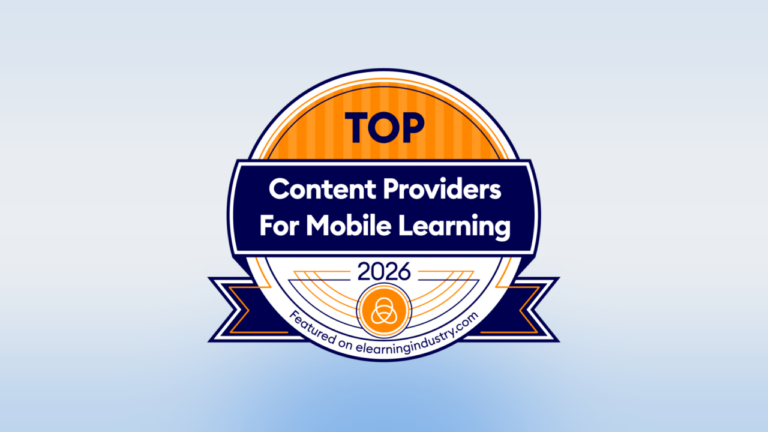
AllenComm Earns Spot on Best Mobile Learning Content Providers 2026 List
eLearning Industry honors AllenComm for its custom mobile learning solutions for enterprise, built to improve performance outcomes at scale. SALT LAKE CITY, [July 29, 2026] — AllenComm has been named to eLearning Industry’s...
ALLENCOMM Press Releases
AllenComm Named a Top Employee Engagement Training Provider by eLearning Industry
AllenComm has been recognized by eLearning Industry as a 2026 top provider for employee engagement, cited for scalable, personalized L&D that drives measurable results. SALT LAKE CITY, [June 24, 2026]...
ALLENCOMM Press Releases