

ALLENCOMM BLOG | Insights
Innovation for the Multigenerational Workplace
October 18, 2018
When it comes to training a wide range of employees, some businesses rightly worry that what’s innovative yet intuitive to older employees won’t impress younger employees and vice versa.
So how do you do it? What can you do to address the technological needs of every age group in your office while still being innovative? We have a few thoughts for you.
Don’t Worry So Much About Millennials
For some years, the worlds of business and education have had a mad love affair with “Millennials.” So many articles are about catering to Millennials, appealing to Millennials, understanding Millennials. (Yes, even we have some of those!) Interestingly, the more people try to understand Millennials, the less they seem to get.
First of all, Millennials aren’t who you think they are. While generations are constantly being redefined, many groups agree that the last of the Millennials were born in 1995 or 1996. Many of the new hires this year came from the next generation, “Post-Millennials” or “Generation Z.” Yet businesses still seem obsessed with appealing to Millennials, and many professionals still use the term to refer to teen or early twenties workers—while not using it to refer to those in their thirties who are technically still Millennials.
Second of all, being a Millennial may not actually be much of a differentiator. “Today’s inter-generational workforce is composed mostly of individuals born between 1945 and 1995, a 50-year span of unprecedented social and technological change. But as the millennials [sic] mature it’s noted that the differences between them and other generations aren’t as significant as thought and ‘life stages’ actually have a bigger impact than generations,” says Kay Sargent, senior principal, and director of the workplace at HOK in Washington, D.C. In other words, a Millennial born in 1988 who has a career, kids, and a mortgage will be more like someone ten years older than them but in the same life stage than like a Millennial born in 1996 who just finished their degree and is still living with parents. It’s, therefore, more helpful to target innovation training to appeal to different life stages rather than to generations.
Examine the Average Workforce Savviness
Are the technological needs of your workforce really as diverse as the age range of your employees? Or are they similar across the board? You won’t know unless you find some way to measure actual levels of employee comfort with technology.
One place to start is the level of technology in your industry as a whole. Plenty of industries have lagged behind in technological advances, and workers in those industries will often work similar technological tools and systems regardless of age. If your industry is traditionally not very tech-heavy, then the level of technological savviness across your workplace may be much flatter than you think. Conduct some surveys and perform some examinations to learn what kinds of innovation your employees would be able to manage in your next training.
You should also take a closer look at your workforce to see the overall aptitude. If the workforce in your workplace is behind or ahead of the curve for technology in your industry, then that will probably give you a pretty good idea of the level of technical proficiency you’re attracting to your workplace and what innovations your people will be comfortable with regardless of age.
Embrace Mentoring
When all is said and done, even if you discover that there is a significant gap in employee ability, that doesn’t mean that you can’t move forward with the most cutting-edge training innovation you can find. However—if you choose to use technology that may be out of the reach of some, you need to provide mentorship for struggling individuals.
There are two standard ways to provide this mentorship. One way is to have it built directly into your training (which is an innovation in itself). This kind of mentorship consists of tutorials that patiently show learners what to do or of clearly delineated navigations that take learners through the training step by step. Learners will eventually be able to use the innovations on their own, but the built-in mentorship lets them progress to that point at their own pace.
The other way to provide mentorship is more traditional: pair a tech-savvy person with a less tech-savvy person. The tech-savvy person will coach and guide the less tech-savvy person, answer their questions, and just be a general support as they cover new technological ground. In this type of mentorship, the less tech-savvy person isn’t as self-reliant, but they form a bond with someone who can respond to them in real time.
In Conclusion
Multiple generations in the workplace don’t exclude innovations. You just have to focus on everyone, check out the average levels of technological savviness in your industry and workforce, and turn to mentoring if necessary.
Resources For L&D Leaders
free guide

free guide
insights | on the blog
ALLENCOMM Press Releases
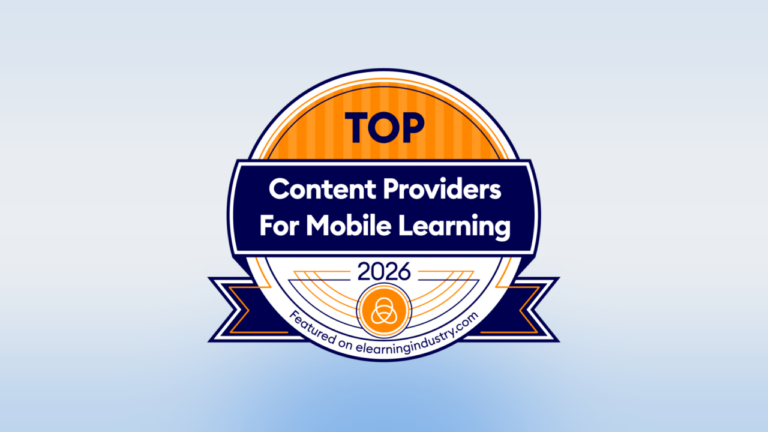
AllenComm Earns Spot on Best Mobile Learning Content Providers 2026 List
eLearning Industry honors AllenComm for its custom mobile learning solutions for enterprise, built to improve performance outcomes at scale. SALT LAKE CITY, [July 29, 2026] — AllenComm has been named to eLearning Industry’s...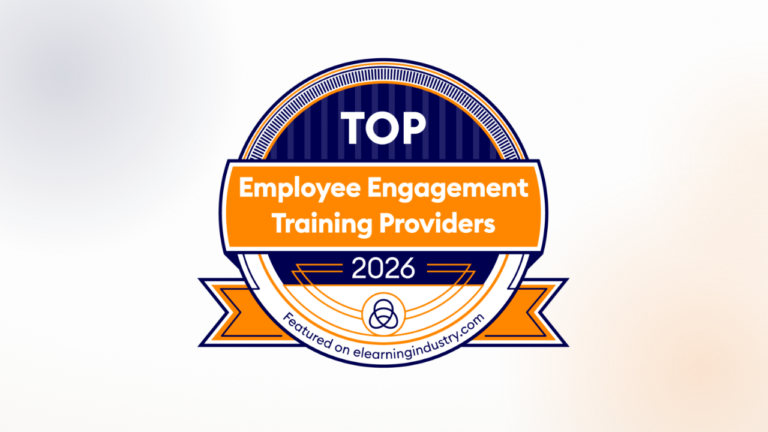
ALLENCOMM Press Releases
AllenComm Named a Top Employee Engagement Training Provider by eLearning Industry
AllenComm has been recognized by eLearning Industry as a 2026 top provider for employee engagement, cited for scalable, personalized L&D that drives measurable results. SALT LAKE CITY, [June 24, 2026]...
ALLENCOMM Press Releases