

ALLENCOMM BLOG | Insights
Automating Remote Onboarding Without Losing Human Connection
December 15, 2025
Successful remote onboarding is no longer a bonus perk: it’s a necessity for companies competing in a distributed-first world. As businesses continue to onboard remote workers across time zones and continents, leaders are pushed to rethink how to create efficient, scalable processes without stripping away the human warmth that makes new hires feel connected.
And that’s the real question: automation promises consistency and speed, but does it risk making the employee experience feel robotic? Well, we have some good news! It doesn’t have to be. With the right strategy, you can automate the right parts while preserving the moments that matter most.
So how can you automate your remote onboarding process without sacrificing culture, community, or genuine human connection? Let’s talk about it.
Why Automation Matters for Modern Remote Employee Onboarding
The demands of distributed work have transformed the expectations around onboarding. Traditional methods (like manual paperwork, full-day training sessions, and in-person meet-and-greets) don’t translate cleanly into virtual environments.
Learning leaders need to establish a remote onboarding process that is:
- Efficient (so HR teams aren’t drowning in repetitive tasks)
- Consistent (so every new hire, no matter where they live, receives a reliable experience)
- Engaging (so new employees feel seen and supported from day one)
Automation helps deliver this balance by removing administrative inefficiencies and giving HR teams more time to focus on relationship-building. Instead of replacing humans, automation enhances their ability to show up in meaningful ways.
Here’s a question we hear often: Can onboarding even be automated? How?
Yes, it can! When done thoughtfully, automation enhances rather than replaces the onboarding experience. In fact, many parts of onboarding are inherently repetitive and lend themselves well to automation, such as …
Pre-boarding logistics. Think about the last time you or your team had to …
- Send an offer letter
- Capture a digital signature
- Complete compliance and payroll forms
- Provide access to company systems
- Assign mandatory trainings
When automated, these steps become seamless, error-free, and globally scalable — three things that are critical for companies onboarding remote workers across different jurisdictions.
Task assignment and tracking. A structured checklist can guide new hires through their first days and weeks. Automation ensures nothing falls through the cracks while giving employees clarity and confidence. Better yet, it can even help provide personalized learning paths through adaptive learning technologies, ensuring that learners have a unique experience that’s tailored to both their needs and aspirational career growth goals.
Information delivery. There’s a lot of information to cover — fast. But HR has other tasks, too, and it can be hard to keep up at times without new hires feeling like they have to wait around for someone to be available. Automated welcome emails, learning modules, FAQ libraries, and video introductions help new hires access what they need sooner, so they can jump into action on the job in less time but with more confidence.
Scheduling. Let’s be honest. Most people don’t like scheduling (and that’s okay). It can be hard to pinpoint a day and time where everyone is available. But that’s where automation helps. With the right technology, you can create automated calendar invites for orientation sessions, IT setup calls, and manager introductions to ensure smooth coordination from even before a new hire’s first day.
But then … what should not be automated?
To protect human connection, we recommend avoiding automation for:
- First-day welcome messages. New hires tend to feel more connected with an organization and their new team if their first-day welcome message comes from someone they’ll actually be working with.
- Manager check-ins. Impersonal check-ins risk leaving new hires without a sense of direction or connection, and they’re unlikely to be able to find personal value in their growth opportunities if a “robot” simply “tells” them what to do.
- Team introductions. When team members reach out to introduce themselves personally, either separately or as part of a larger group meeting, it creates an atmosphere that welcomes lively conversations, builds relationships, and establishes direct lines of communication the new hire can go to whenever they need help.
- Mentoring and buddy programs. New hires benefit greatly from mentorship and other peer-driven learning opportunities; however, these programs must be human-driven to be truly effective. This allows each new hire to ask questions as they come up and get the most out of learning in the moment — with someone they trust by their side.
In essence, it all comes down to this: automation should streamline the logistics, not replace meaningful relationships.
Can onboarding be done remotely?
Absolutely! In fact, the world has seen a clear shift specifically to remote onboarding and remote work the past several years, evolving with a sophisticated blend of technology, communication, and culture-building. Remote onboarding is now standard and highly effective when intentionally designed.
But success requires more than transferring in-office processes to video calls. In our experience, we’ve found that the following strategies help remote onboarding thrive:
1. Clarity and structure.
Remote hires can’t simply “look around” to figure things out. They need explicit guidance, which includes …
- Clear timelines
- Defined goals for week 1, 30 days, 60 days, and 90 days
- Transparent expectations for communication
2. Human touchpoints.
Even in a fully digital environment, people crave human interaction. Foster opportunities for this interaction with:
- Live welcome sessions
- Virtual coffee chats with teammates
- Regular manager check-ins
- Informal community channels (Slack, Teams, etc.)
These moments build belonging — something new remote workers often worry about.
3. Culture immersion.
Your remote onboarding process must actively introduce people to your culture. Try providing …
- Videos that showcase values and stories
- Access to employee resource groups
- Leader introductions and Q&A sessions
- Virtual team-building events
Remember: Culture doesn’t appear automatically online; it must be cultivated.
4. Technology that simplifies.
Remote onboarding succeeds when technology supports the experience instead of overwhelming it. Try using these useful tools to support your technology strategy and maximize your return on investment:
- Onboarding platforms
- Learning management systems
- Automated workflows
- Knowledge bases
- Communication hubs
5. Inclusivity across time zones.
Asynchronous materials (recordings, documents, chat spaces) empower global teams to participate fully without inconvenience.
Remote onboarding is not only possible — it’s an opportunity to create an experience that is personal, accessible, and consistent for every new hire.
How do I use AI for onboarding?
AI elevates onboarding by creating personalized, scalable experiences that feel human.
Let that sink in for a moment. AI doesn’t remove the people from onboarding; instead, it helps them work smarter and focus on high-value interactions. Here are some examples that speak to how AI has transformed the remote onboarding process for top companies across the world:
- Personalized onboarding journeys that matter. AI can tailor training paths, content, and recommended resources based on role, department, skill level, prior experience, learning preferences, and more. New hires receive a curated experience—like having a concierge guide them through their first months.
- AI-powered help desks to provide support. AI chatbots free HR teams from repetitive inquiries, dramatically shorten response time, and reduce confusion by answering common questions instantly, such as:
- “Where do I find company policies?”
- “How do I set up my benefits?”
- “Where do I log time?”
- Intelligent scheduling to streamline communication and make the most of available time. AI can coordinate calendars across time zones, making it easy to book orientation sessions, IT setup calls, manager one-on-ones, training sessions, and more. This ensures smoother transitions during remote onboarding.
- Real-time progress tracking to monitor results. AI systems can analyze onboarding performance, flagging when a new hire falls behind on tasks, seems disengaged, or needs additional support. This helps managers intervene earlier, improving retention and success.
- Sentiment analysis for employee experience. AI tools can analyze written feedback, survey responses, or engagement metrics to identify stress points, emotional tone, and other common themes in the new-hire journey, which allows HR teams to continuously improve the remote onboarding process over time even as goals shift.
- AI-generated content to fill gaps and do more with your investment. AI can create critical learning resources, such as customized training modules, knowledge base articles, video scripts, or step-by-step guides. With the right governance strategy, effective, efficient AI use reduces time spent creating manuals and ensures content stays up to date — and compliant, with learners’ rights at the heart of the process.
Keeping Human Connection at the Center of L&D and Onboarding
While AI handles the logistics and knowledge delivery, it’s clear that HR and team leaders must maintain:
- Live conversations
- Personal mentoring
- Warm welcomes
- Recognition and feedback
AI amplifies connection when used to support — not replace — human interaction. To help you take action in your own organization, we’ve compiled a list of our top best practices for automating remote onboarding … without losing the human element.
- Automate “tasks,” not “touchpoints.” Use automation to simplify work, not replace relationships.
- Combine asynchronous and synchronous experiences. For example, consider how you can best blend on-demand learning for flexibility with live sessions to drive the human connection that new hires crave.
- Create human-led habits. A welcome message, a team video call, or a personal note from a manager maintains warmth and helps new hires find their place in the organization early.
- Use AI as an assistant, not a decision-maker. As a learning leader, you hold the ultimate responsibility for making decisions, so make those decisions count! Let AI support onboarding operations while ensuring that you and your team take the lead in creating meaningful moments that connect new hires with culture from their first interaction.
- Keep communication open. Build channels where new hires can ask questions, share concerns, and get support from real people.
- Measure what matters. Track engagement, satisfaction, completion rates, and performance to refine your process.
Get Ready to Take Action
So, let’s bring it back to the start: automation isn’t the enemy of connection — it’s the gateway to creating space for it. By automating administrative tasks and using AI to personalize the experience, you can deliver an efficient remote onboarding process that still feels warm, supportive, and genuinely human. When done right, remote employee onboarding becomes a strategic differentiator, not just a logistical necessity.
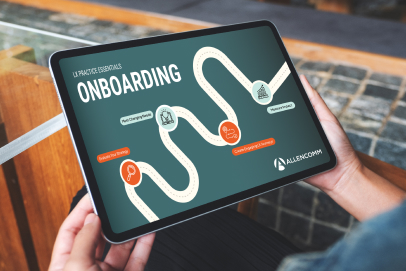
Ready to build a better remote onboarding experience?
Discover our onboarding solutions and learn how you can automate onboarding without sacrificing human connection.
Resources For L&D Leaders
free guide
free guide
insights | on the blog
ALLENCOMM Press Releases
AllenComm Earns Spot on Best Mobile Learning Content Providers 2026 List
eLearning Industry honors AllenComm for its custom mobile learning solutions for enterprise, built to improve performance outcomes at scale. SALT LAKE CITY, [July 29, 2026] — AllenComm has been named to eLearning Industry’s...
ALLENCOMM Press Releases
AllenComm Named a Top Employee Engagement Training Provider by eLearning Industry
AllenComm has been recognized by eLearning Industry as a 2026 top provider for employee engagement, cited for scalable, personalized L&D that drives measurable results. SALT LAKE CITY, [June 24, 2026]...
ALLENCOMM Press Releases