
What Experience Has Taught Us
- We can leverage the full range of new learning tech to simulate complex environments for safe practice, including AR/VR, video, hybrid solutions, etc.
- We understand the critical nature of the content and have processes to efficiently collaborate with your busy subject-matter experts and ensure the technical accuracy of the content.
- Often, our healthcare clients are looking to solve complex organizational challenges that cannot be met with a simple eLearning tutorial. We design solutions that are targeted to your specific challenges and desired outcomes.
Revolutionizing Nursing Leadership Development
Listen to Amy Trueblood, Senior Director of Leadership Development for the American Organization for Nursing Leadership (AONL), explore the complex challenges faced by nurse managers and how effective leadership development is crucial for improving patient care and organizational outcomes.
Hear MoreViral Healthcare Training
Listen to Gina Montefusco, Sr. Director of Culture and Strategic Initiatives at UnitedHealth Group, share what it means to innovate and scale for a large healthcare organization—while engaging leadership, enhancing technology, and employing practical project planning strategies to make an impact.
Hear MoreFeatured Work
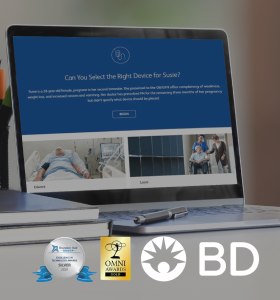
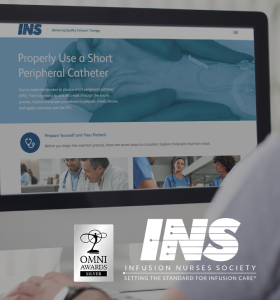
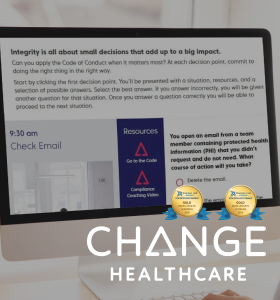
We have worked with several clients in the healthcare and medical industries, helping them to achieve lasting performance improvement. Here are a few examples of our work, but we have a broad portfolio of clients in the healthcare industry.
Custom Learning Solutions for the Healthcare Industry
Successful medical/healthcare training must flex to accommodate medical professionals’ schedules and practices while the content must engage participants. We have developed strategies to ensure training for medical/healthcare professionals meets these requirements.
Learning Needs for Healthcare and Medical
Due to the strict regulations in the healthcare and medical industries, common training needs include compliance training to ensure employees are kept up to date on the latest safety and health regulations. Other training courses include leadership and upskilling to help healthcare professionals grow their careers.
Organizational Needs
- Talent shortages in healthcare workers, particularly in particular specialties
- Addressing rising costs in terms of care, drug prices, and administration
- Increasing regulation and reform in areas of data privacy, insurance, uninsured access to care, etc.
- Disruption due to emerging technology and changing roles for healthcare professionals
Learning Needs
- Onboarding and upskilling programs that accelerate learner readiness for new roles
- Training on new processes and protocols that changes established practices to improve outcomes while decreasing costs
- Compliance training that goes beyond the minimal requirement to shape culture and patient care
- Ongoing and continuing education that helps busy learners stay current with change
Learning Solutions for Healthcare
The technical and scientific nature of healthcare, and the life and death issues it often entails, put special demands on employee training programs. When training is required, it must scale to allow time for participants to build their skills without disrupting their vital work. As new studies cause the medical field to grow and change, medical professionals must keep up with the latest procedures in order to comply with best practices. We can implement strategies to ensure training materials are updated regularly. We design training to be engaging and effective without being overwhelming.
Learning Solutions
- Realistic trouble-shooting scenarios for realistic practice in a safe environment
- Instructional video to teach interpersonal skills and establish the context and criticality of these interactions
- Adaptive assessments that identify where busy professional need to focus their learning
- Achievement portfolios that combine goal setting with project-based or on-the-job apprenticeship
Learner Outcomes
- Reduce diagnostic errors and associated costs on the job
- Increase learner confidence by 20% or greater
- Decrease the overall seat-time of formal instruction while increasing the efficacy of the learning
- Retain talent and meet growing demand for leaders in specialized fields