
ALLENCOMM BLOG | Insights
Boosting Employee Performance with Corporate Simulation Training
December 23, 2025
Employee development isn’t optional, especially for leaders looking to establish high-performing teams that can set their organization apart from the competition. And when you invest in employee development, you prove your commitment to growth, innovation, and long-term success — people notice that.
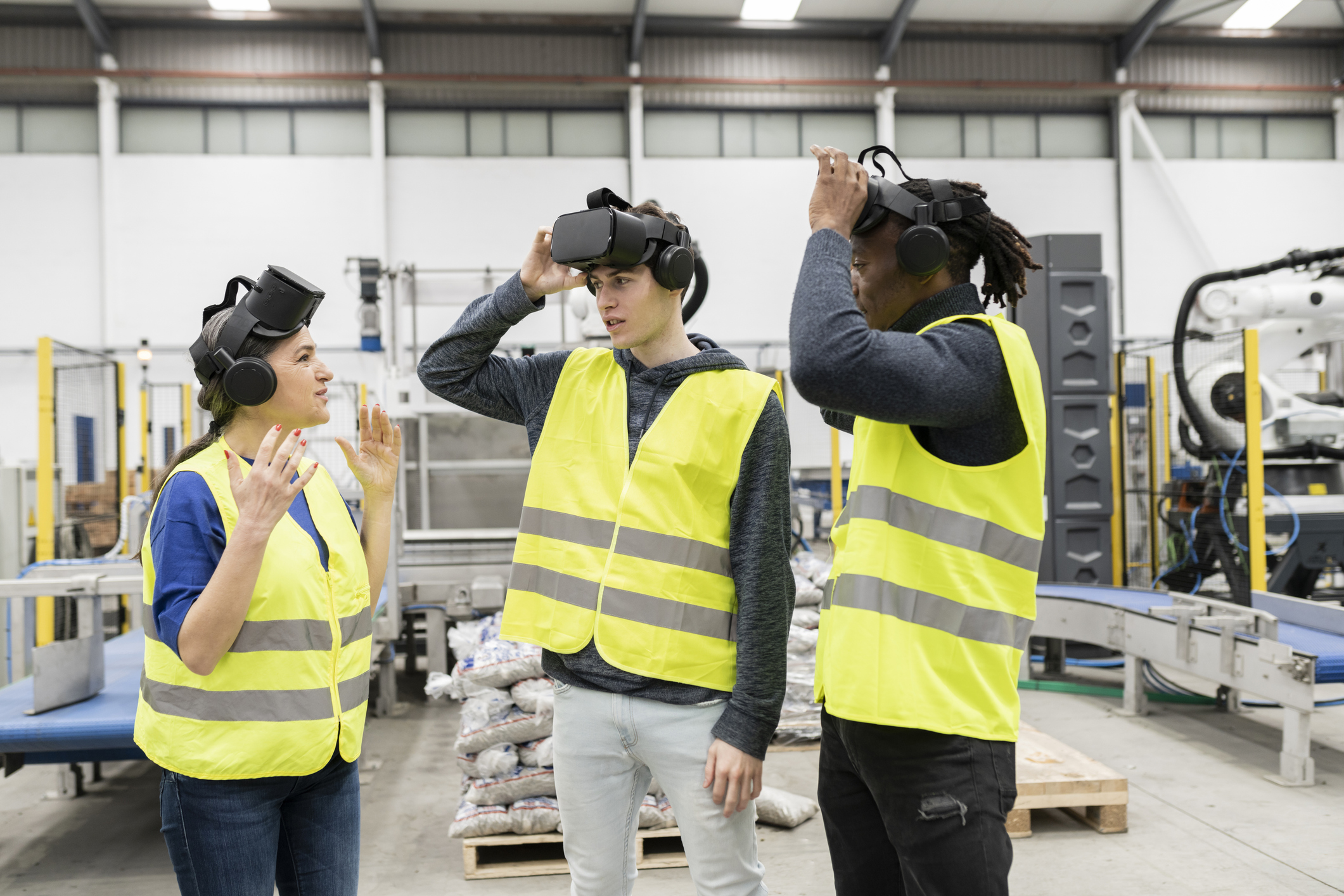
Moreover, as modern workplaces become increasingly complex and fast-paced, traditional training approaches often fall short in preparing employees for real-world challenges. This is where simulation training emerges as a game-changing strategy. By placing employees in controlled, hands-on virtual environments, companies can build competence, strengthen decision-making, and ultimately improve overall employee performance within their teams.
Corporate simulation training has rapidly become one of the most powerful methods for enhancing workforce skills because it replicates actual business scenarios in a safe, measurable, and immersive way. Whether using a training simulator to teach operational procedures or engaging staff in comprehensive business simulation training, you can empower your employees to learn by doing — without the risks associated with on-the-job mistakes.
So, how do simulation-based programs elevate training outcomes? How do they support upskilling initiatives? And how do online simulation tools contribute to improving employee performance in today’s digital workplace? Let’s talk about it!
How Simulations Enhance Corporate Training
Corporate training simulations have evolved far beyond simple role-playing or digital walkthroughs. They now incorporate advanced technology, realistic environments, and dynamic variables that adjust to employee behavior. As a result, simulation-driven training solutions provide unique benefits that traditional learning methods simply cannot match.
And yet, many leaders hesitate to take the plunge because in today’s market, they simply don’t have the budget … despite expectations being higher than ever. But here are some key talking points you can use to make a business case with executives to help them buy into the investment:
1. Realistic, Risk-Free Learning Experiences:
The biggest advantage of corporate simulation training is its ability to offer a realistic environment that accurately mirrors workplace tasks or business conditions — without the real-world consequences.
This enables team members to:
- Practice critical decisions
- Perform technical tasks
- Test strategies
- Solve complex challenges
- Learn from mistakes
This “safe-to-fail” setting removes pressure and encourages experimentation, ultimately leading to deeper understanding and improved performance.
For example, a customer service simulation might allow employees to navigate difficult client interactions, while a financial simulation might test budgeting decisions under shifting market conditions. These experiences help build confidence and competence long before employees face comparable real situations.
2. Increased Engagement Through Active Participation:
Traditional training formats (such as lectures, static eLearning modules, or lengthy manuals) often struggle to keep learners engaged. After all, no one enjoys training that feels boring, or like they’re simply checking something off a list instead of learning about what really matters to their growth personally.
Simulations eliminate the passive learning problem by requiring active participation. They increase engagement by requiring team members to:
- Make choices
- React to scenarios
- Apply knowledge
- Adapt in real time
This hands-on design stimulates critical thinking and boosts retention. In fact, research consistently shows that experiential learning improves memory and skill application significantly more than lecture-based methods.
When employees are fully engaged, they are more likely to internalize key concepts and apply them effectively at work. This leads to measurable improvement in employee performance.
3. Personalized Learning Paths:
One of the most transformative aspects of modern simulation systems is their adaptability. Intelligent simulation tools can adjust difficulty levels, introduce new variables, and tailor experiences based on individual employee performance.
When you personalize learning in a way that matters, you help learners:
- Gain confidence through guided practice, even if they’re someone who may learn more slowly than others on their team
- Embrace the freedom of their learning at their own pace, as advanced learners can accelerate without having to wait on others to be available or catch up
Personalization also helps leaders! Because simulations generate data on decisions, actions, and skill proficiency, leaders gain clear insights into where individuals excel and where further training is needed. These simulation outcomes allow leaders to identify high-potential employees and encourage their growth.
4. Better Alignment Between Training and Business Outcomes:
Corporate training simulations aren’t just educational — they’re strategic. They replicate the actual challenges employees face in their specific job roles or departments. This ensures the training experience is directly tied to organizational goals.
For example:
- Leadership simulations can mirror real organizational dynamics
- Sales simulations can replicate customer objections
- Compliance simulations can mirror regulatory scenarios
- Operational simulations can involve machinery, logistics, or production lines
When training is aligned with real business scenarios, behavior change happens faster and more effectively! To explore more about corporate training solutions, visit AllenComm’s corporate training resources.
Now that we’ve explored how simulations enhance corporate training, let’s talk about the actual upskilling process — and how simulations can play a vital role.
Using Simulations to Upskill Employees
Skills gaps have widened significantly in recent years due to technological advancements, shifting business priorities, and evolving customer expectations. As leaders navigate these changes, they require rapid, scalable methods to upskill their workforce. Simulation training is uniquely suited to meet this demand in multiple ways:
- Developing Core and Advanced Skills: Simulations can be designed for nearly any skill level, from foundational skills to highly advanced competencies.
- Some foundational skills include basic customer communication, operational safety, introductory leadership capabilities, and system or software navigation.
- Advanced skills can include strategic decision-making, advanced troubleshooting, financial forecasting, or high-stakes negotiation.
- Accelerating Skill Growth: Because simulations replicate real-world conditions, employees are able to practice and reinforce critical skills that may otherwise take months or years to develop through real-world experience alone.
- Upskilling Through Real-Time Feedback: One of the major strengths of simulation-based learning is its built-in feedback system. Employees receive instant insights into their decisions, actions, and outcomes. This immediate feedback accelerates learning and enhances comprehension. Instead of waiting for a supervisor’s evaluation or performance review, employees instantly understand what they did right or wrong and can correct behavior in real time.
- Feedback may include items like scored performance, highlights of errors, suggested improvements, scenario walk-throughs, or outcome analysis.
- Increasing Adaptability and Flexibility: Today’s workforce must be agile and adaptable. Workplace conditions change quickly, new technologies emerge, and business strategies shift. Traditional training tools often just can’t keep up with these rapid changes. Luckily, simulations are incredibly flexible and can be updated quickly to reflect things like new policies, updated compliance standards, market changes, and more to meet evolving business needs.
- Encouraging Proactive Skill Development: Simulation training fosters a mindset of continuous improvement. Employees are encouraged to repeat scenarios, explore alternative decisions, and refine their skills at their own pace. This helps organizations cultivate a workforce that seeks out knowledge proactively rather than waiting for training directives.
By empowering employees to take charge of their learning, leaders can sustain a long-term culture of improvement and innovation, as well as boost performance — with the right tools.
Boosting Employee Performance with Online Training Tools
Remote and hybrid work have dramatically increased the demand for flexible digital training solutions. Online simulation tools make it possible for organizations to deliver high-impact, interactive learning experiences accessible from anywhere.
These online training tools combine convenience, scalability, and interactivity, making them ideal for large, geographically dispersed workforces or organizations seeking cost-efficient development methods.
Still need some ideas for how to build a case to invest in online tools that enable successful simulation training? Here are our top picks.
Accessibility and Convenience: Online simulation platforms give employees access to training anytime, anywhere! This means there’s no need for physical spaces, travel, or scheduling constraints. Employees can log in and practice skills during downtime, after shifts, or wherever they have an internet connection.
Team members tend to prefer this type of experience because it gives them more control over their time, leading to higher participation, improved consistency, and increased motivation. Convenience is a key factor in improving employee performance because employees are more likely to complete and revisit training that fits into their workflow naturally.
Data-Driven Metrics for Performance Tracking: Online simulation tools generate valuable insights for both learners and organizations. Through detailed analytics, managers can track:
- Scenario completion
- Mistake patterns
- Skill progression
- Time on task
- Individual and team performance
- Knowledge gaps
This data provides a clear picture of training effectiveness and helps managers tailor development plans for each employee. When employees receive personalized guidance based on their actual performance, they improve faster and more consistently. It’s a win-win!
Scalable Corporate Training Simulations: One of the greatest challenges in corporate training is scaling programs across large teams or multiple locations. Online training tools solve this problem by allowing unlimited employees to access simulations without additional resource strain.
Regardless of whether you’re training 50, 500, or 5,000 employees — sometime worldwide — online simulations deliver uniform, high-quality learning experiences. This standardization can help you maintain consistent performance expectations and reduce variability in employee skills.
Boosting Confidence and Reducing On-the-Job Errors: When employees can practice repeatedly in a simulated environment, they gain confidence long before they face real-world challenges. This reduces the likelihood of costly errors, improves customer satisfaction, and enhances overall operational efficiency.
Employees enter their roles feeling more prepared and knowledgeable about the work they need to do. They’ll also feel more confident and capable, which can even improve team dynamics as team members build trust that everyone on the team can (and will!) do what they say they are going to do. Confidence plays a crucial role in performance, and simulation-based online training provides the perfect environment for building it.
Take the Next Step and Bring Your Simulation Training to Life
Let’s bring it back to the start: Corporate simulation training has transformed the way organizations approach workforce development. By combining experiential learning, real-time feedback, online accessibility, and measurable outcomes, simulations offer one of the most effective ways to elevate employee performance across departments and industries.
Whether you’re looking to upskill your workforce, boost productivity, reduce errors, or prepare employees for complex job functions, simulation-based training offers a scalable, engaging, and results-driven solution. So, as a leader, what steps are you going to take to boost employee performance and get ahead with corporate simulation training? Take note of one or two things you can do over the next few weeks to get started!
PS: Remember that you don’t have to do it alone. AllenComm has industry-leading corporate training strategies and solutions, and we were even recently recognized by eLearning Industry as a top provider of simulation training. We’d love to help you find your next step to enhancing your team’s performance with simulation-drive learning.
Resources For L&D Leaders
free guide
free guide
insights | on the blog
ALLENCOMM Press Releases
AllenComm Earns Spot on Best Mobile Learning Content Providers 2026 List
eLearning Industry honors AllenComm for its custom mobile learning solutions for enterprise, built to improve performance outcomes at scale. SALT LAKE CITY, [July 29, 2026] — AllenComm has been named to eLearning Industry’s...
ALLENCOMM Press Releases
AllenComm Named a Top Employee Engagement Training Provider by eLearning Industry
AllenComm has been recognized by eLearning Industry as a 2026 top provider for employee engagement, cited for scalable, personalized L&D that drives measurable results. SALT LAKE CITY, [June 24, 2026]...
ALLENCOMM Press Releases