
ALLENCOMM BLOG | Insights
Preparing for the Future: AI in eLearning and Workforce Agility
December 31, 2025
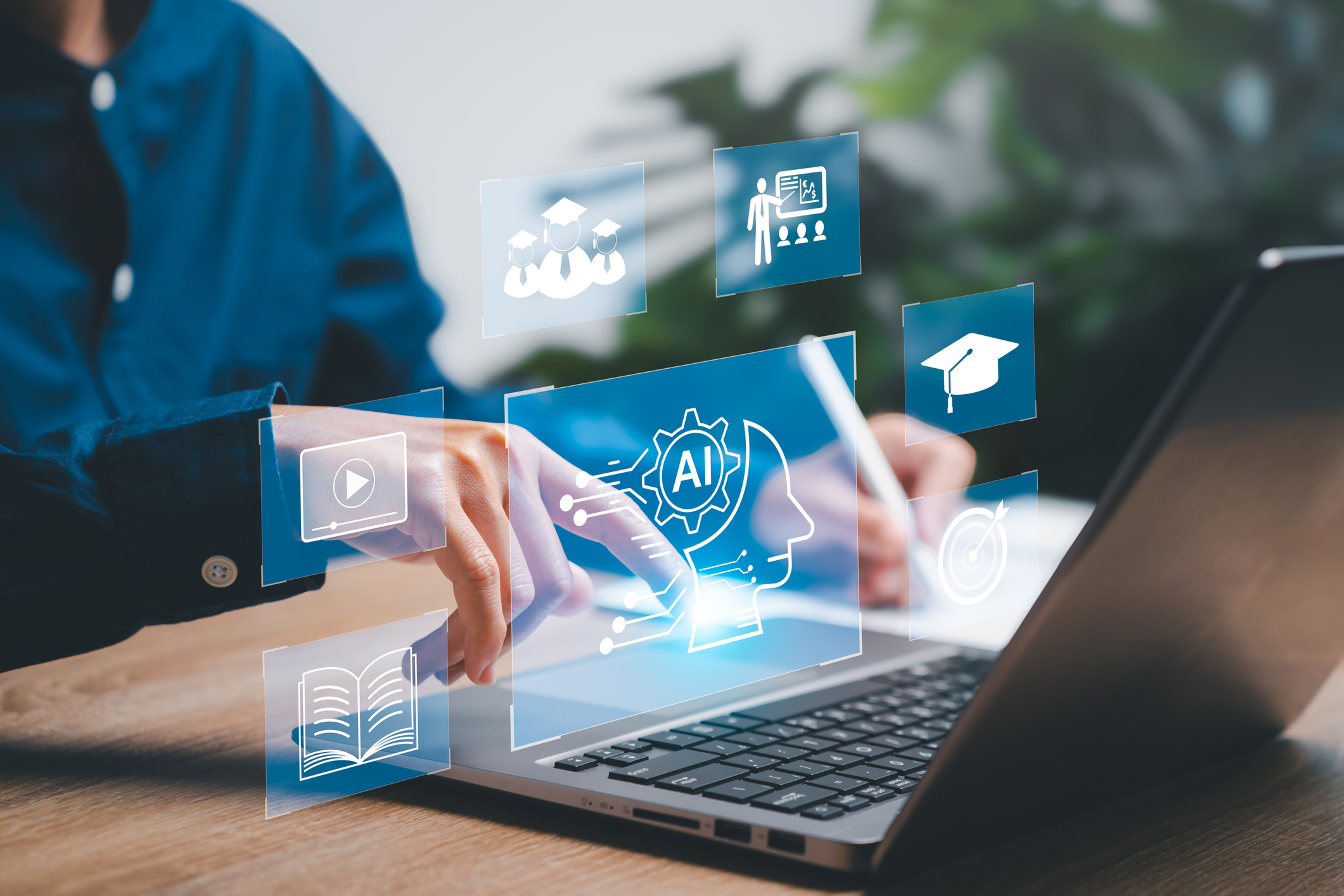
Today’s digital economy is facing an unprecedented pace of change. Automation, artificial intelligence, and rapid technological innovation are reshaping how we work, learn, and grow. And at the heart of this transformation lies AI in eLearning, a powerful force enabling leaders to prepare their workforce for the future in three major ways: agility, precision, and scalability.
As job roles evolve and skill requirements shift, businesses must rethink traditional training models and embrace intelligent learning systems that can adapt in real time. From personalized learning paths to predictive analytics and skill forecasting, the use of AI in eLearning is no longer a futuristic concept — it’s a strategic necessity.
In fact, organizations that invest in AI-driven learning ecosystems are better equipped to build workforce agility, close skills gaps, and remain competitive in an increasingly uncertain world. On the other hand, organizations that neglect AI opportunities risk falling behind.
What about your own organization? As a leader, how are you showing up to this change? Let’s take a closer look at how AI eLearning technologies are shaping the future of work — and how you can embrace these technologies to strengthen workforce agility, get ahead, and prepare for tomorrow’s careers.
Understanding AI in eLearning: A Foundation for the Future
We’ll start with a definition. AI in eLearning refers to the integration of artificial intelligence technologies — such as machine learning, natural language processing, and data analytics — into digital learning platforms. These technologies enable systems to analyze learner behavior, adapt content dynamically, and deliver highly personalized learning experiences at scale.
There’s where the one of the core benefits lies: unlike traditional one-size-fits-all training programs, AI-powered eLearning evolves alongside the learner. It identifies strengths, highlights gaps, and recommends targeted learning interventions. It makes learner personal. It makes it relevant. And it makes it real.
This adaptability is critical in a world where skills become obsolete faster than ever before. For example, with the right AI eLearning strategy, you can:
- Personalize learning pathways based on learner performance and preferences
- Curate intelligent content recommendations
- Provide real-time feedback and assessment
- Receive predictive analytics for skill development
- And more!
By leveraging these capabilities, you can move from reactive training to proactive, future-focused workforce development. And in today’s market, this agility matters more than ever.
Why Workforce Agility Matters More Than Ever
Workforce agility can mean many things … but overall, it refers to your organization’s ability to rapidly adapt its people, skills, and capabilities in response to change. In an era defined by digital disruption, agility is no longer optional. It is absolutely essential for survival.
Agile teams can respond quickly to market and technology shifts, which keeps your organization at the top of the game. As a leader, the better prepared you are to reskill and upskill employees efficiently, the faster you can innovate compared to your competitors.
Let’s be honest: it also isn’t a secret that engaging, effective learning makes a difference. It fosters a culture of continuous learning and improvement, which also contributes to talent retention — it’s a win-win! And AI in eLearning plays a pivotal role in enabling this agility. By providing continuous, data-driven learning opportunities, AI-powered platforms help employees stay relevant and confident as roles evolve.
So, what does AI look like in the workplace? Here’s how we see it.
AI in the Workplace: Preparing for Tomorrow’s Careers
The future workplace will look very different from today. Many roles that exist now will evolve, while entirely new careers will emerge, often driven by automation and AI itself. There’s a lot to look forward to … but it can also seem daunting!
Preparing for tomorrow’s careers requires a shift in how you approach learning and development from the foundation up. AI in the workplace supports this transition in four key ways:
- Identifying emerging skill trends through data analysis
- Mapping future roles and competency requirements
- Aligning learning content with real-world job demands
- Enabling continuous learning rather than episodic training
AI eLearning platforms can analyze industry trends, job market data, and internal workforce performance to predict which skills will be in demand. This foresight allows organizations to proactively train employees for roles that may not yet fully exist.
For employees, this means greater career resilience. Rather than fearing automation, learners equipped with AI-driven training can pivot, grow, and thrive alongside technological change. Better yet, they can personalize their skill development in ways that actually matter to them, envisioning a future where their career can grow in your organization for years to come.
The Use of AI in eLearning for Personalized Skill Development
One of the most powerful advantages of the use of AI in eLearning is personalization. No two learners are the same, and AI recognizes this reality. But because AI is still so new in our industry, leaders often don’t know where to start, and that’s okay.
To break it down simply, AI-driven personalization often includes:
- Adaptive learning paths that adjust content difficulty
- Customized assessments based on learner progress
- Content delivery in preferred formats (video, text, simulations)
- Intelligent pacing that aligns with individual learning speeds
This level of personalization enhances engagement, improves knowledge retention, and accelerates skill acquisition and AI adoption. For organizations, it means faster time-to-competency and more effective workforce development.
Personalized AI eLearning also supports inclusion by accommodating diverse learning styles, language preferences, and accessibility needs — ensuring that every employee has the opportunity to succeed, no matter their background or where they are in the world.
Future-Ready Workforce Strategies: Upskilling, AI, and Skill
As we’ve mentioned, building a future-ready workforce requires a strategic approach that combines upskilling, reskilling, and intelligent learning technologies. But we can dive even deeper: here’s a look at how AI in eLearning serves as the backbone of these strategies.
Upskilling at Scale: AI-powered platforms enable organizations to upskill large, distributed workforces without sacrificing quality. Automated content recommendations and smart assessments ensure learners focus on the skills that matter most.
Continuous Reskilling: As job roles change, AI eLearning systems identify when employees need reskilling and deliver targeted learning experiences. This proactive approach minimizes disruption and keeps talent aligned with business needs.
Skill-Based Learning Models: AI helps shift learning from role-based training to skill-based development. By focusing on transferable skills (such as critical thinking, data literacy, and digital collaboration) organizations build resilience against future change.
Together, these strategies ensure that learning is not a one-time event but an ongoing journey aligned with organizational goals. So, how do we prove it? Stakeholders and other key decision makers need to see that their investment will be worthwhile. Luckily, AI can help with that too.
AI eLearning and Data-Driven Decision Making
Data is the fuel that powers AI in eLearning. Every interaction — clicks, assessments, completion rates, and feedback — generates insights that inform smarter decisions. AI-driven analytics can help you:
- Measure training effectiveness in real time
- Identify skill gaps across teams and departments
- Predict future learning needs
- Optimize content investments
Instead of relying on intuition or outdated metrics, learning leaders can make evidence-based decisions that directly impact workforce performance and agility. This data-driven approach also supports compliance, performance management, and leadership development initiatives, ensuring alignment across the organization.
Shaping Workforce Readiness with AI and Agility
Workforce readiness is about more than having the right skills today — it’s about being prepared for tomorrow. AI in eLearning enables organizations to continuously assess readiness and adapt learning strategies accordingly.
A good AI-driven readiness framework should include strategies like real-time skill mapping and benchmarking, or readiness dashboards for leaders and HR teams. Then, you can take it to the next level with strategies involving scenario-based learning simulations and continuous feedback loops to reach new heights in engagement.
By combining AI insights with agile learning practices, you can create a culture of adaptability that encourages employees to lean into learning, uncover excitement and personal motivations, experiment safely, and grow with confidence. This creates an undeniable synergy between AI and agility, ensuring that workforce development remains aligned with business strategy even as conditions change.
But no change comes without challenges. (We’re here to help with those too!)
Overcoming Challenges in AI-Driven eLearning
While the benefits of AI eLearning are significant, successful implementation requires careful planning. In our 40+ years of experience in eLearning, as well as several years of experience in new AI-driven learning technologies, we’ve found that so far, the top challenges include:
- Data privacy and security concerns
- Integration with existing learning systems
- Change management and user adoption
- Ensuring ethical and unbiased AI models
You can address these challenges by adopting transparent AI practices, prioritizing learner trust, and partnering with experienced eLearning development providers. Clear communication, leadership support, and continuous evaluation are key to long-term success. And it’s not as hard as it sounds! As a leader, you hold the key to AI-enabled learning transformation.
The Role of Leadership in AI-Enabled Learning Transformation
Your role in shaping how AI in eLearning is adopted and embraced cannot be understated. As a leader, you are in a unique position to champion continuous learning, invest in the right technologies, and foster a growth mindset across the organization.
However, to be truly effective, you must learn to align learning initiatives with strategic goals in a way that will make a difference for the business. Sometimes, this means encouraging experimentation and innovation, and other times, it means investing in what you know already works as you prepare for the next big change ahead. And with every change, it also means creating a plan to support employees through it.
AI can also help guide talent decisions, providing insights into candidate skills, growth potential, and capabilities in helping to achieve these strategic goals from quarter to quarter. Moreover, when leadership actively supports AI-driven learning, workforce agility becomes embedded in the organizational culture rather than treated as a standalone initiative, which further improves talent and performance for better outcomes.
The Future Outlook: AI eLearning as a Strategic Advantage — and How You Can Use It to Prepare for Tomorrow
Looking ahead, AI in eLearning will continue to evolve, incorporating advanced technologies such as generative AI, immersive learning environments, and intelligent virtual coaches. These innovations will further enhance personalization, engagement, and scalability.
Organizations that act now will gain a strategic advantage — building agile, future-ready workforces capable of navigating uncertainty with confidence. Those that delay risk falling behind as skills gaps widen and competition intensifies.
But preparing for the future requires more than predicting trends. It demands action. AI in eLearning offers organizations a powerful way to build workforce agility, close skills gaps, and prepare employees for the careers of tomorrow. By embracing AI-driven learning, you can transform training into a strategic asset that evolves with the workforce and supports long-term success.
The future of work belongs to organizations that invest in intelligent, adaptive learning today. Yet, you don’t have to go the journey alone. AllenComm can be a strategic partner that empowers your workforce with AI-driven, future-ready learning experiences. If you have a new initiative on the horizon — or you simply want to enhance your AI and L&D strategy — let’s talk! We’d love to partner with you to design intelligent eLearning solutions that build agility, resilience, and lasting impact.
Resources For L&D Leaders
free guide
free guide
insights | on the blog
ALLENCOMM Press Releases
AllenComm Earns Spot on Best Mobile Learning Content Providers 2026 List
eLearning Industry honors AllenComm for its custom mobile learning solutions for enterprise, built to improve performance outcomes at scale. SALT LAKE CITY, [July 29, 2026] — AllenComm has been named to eLearning Industry’s...
ALLENCOMM Press Releases
AllenComm Named a Top Employee Engagement Training Provider by eLearning Industry
AllenComm has been recognized by eLearning Industry as a 2026 top provider for employee engagement, cited for scalable, personalized L&D that drives measurable results. SALT LAKE CITY, [June 24, 2026]...
ALLENCOMM Press Releases