
ALLENCOMM BLOG | Insights
Measuring the Impact of AI Onboarding on Organizational Productivity
January 8, 2026
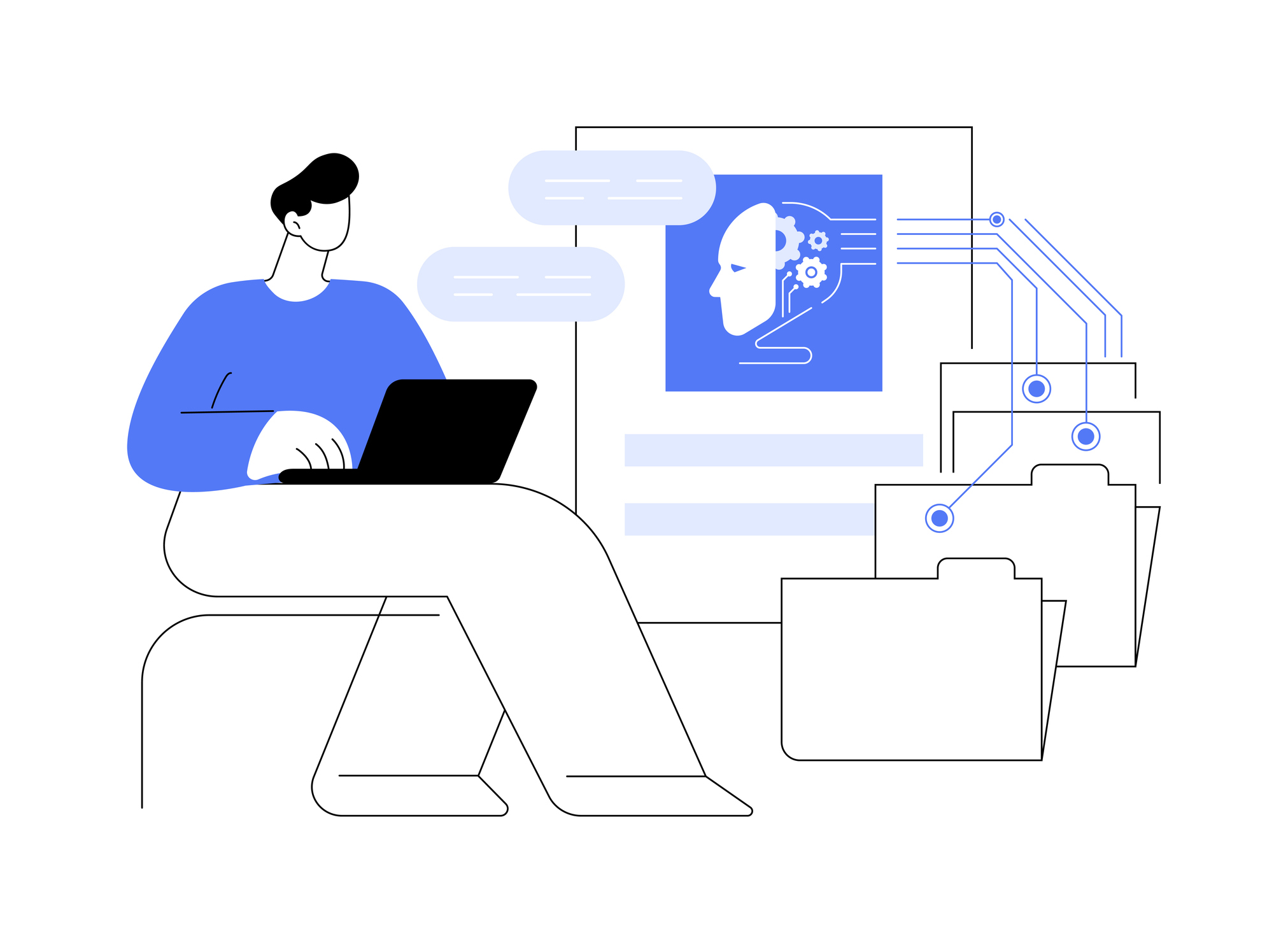
AI onboarding is quickly becoming one of the most influential tools you can use to improve productivity, accelerate time-to-competency, and create consistent onboarding experiences at scale. Especially as work environments grow more complex and distributed, traditional onboarding models — often manual, inconsistent, and difficult to measure — are no longer sufficient.
For HR and L&D leaders, the conversation has shifted. The question is no longer whether to use AI in employee onboarding, but how to measure its impact on organizational productivity in a meaningful, data-driven way.
When implemented strategically, AI-powered onboarding does far more than automate tasks. It personalizes learning paths, provides real-time insights into employee progress, identifies skill gaps early, and equips leaders with the data they need to improve onboarding outcomes continuously.
The results?
- Faster ramp-up
- Higher engagement
- Stronger performance
- Measurable business impact
Let’s explore how AI transforms the onboarding experience, how it impacts productivity at an organizational level, and — most importantly — how, as a leader, you can measure success using the right metrics and systems.
How AI Is Changing Onboarding for Organizations
AI is fundamentally reshaping how organizations onboard new employees. Instead of static, one-size-fits-all programs, AI-powered onboarding enables adaptive, personalized, and scalable learning experiences aligned to both employee needs and business goals. And it starts with the shift from a process-driven solution to an experience-driven onboarding.
From Process-Driven to Experience-Driven Onboarding
Traditional onboarding often focuses on logistics, like forms, policies, and checklists. While these elements are necessary, they do little to ensure new hires are productive, confident, and aligned with organizational expectations.
AI in employee onboarding shifts the focus from administrative completion to performance readiness by:
- Personalizing onboarding content based on role, experience, and skill level
- Adapting learning paths as employees progress
- Delivering content in preferred formats (video, simulations, microlearning)
- Providing real-time feedback and guidance
This creates an onboarding experience that feels relevant, engaging, and directly connected to job performance, which accelerates time-to-productivity!
Accelerating Time-to-Productivity
One of the most measurable benefits of AI onboarding is reduced time-to-productivity. By identifying what a new hire already knows (and where they need support), AI-powered onboarding avoids unnecessary repetition and focuses learning where it matters most.
Employees reach proficiency faster because they are practicing real-world tasks, receiving immediate feedback, and reinforcing skills in context rather than passively consuming content. However, when using AI for onboarding, many leaders share a common concern: how do you enable scalability without sacrificing quality?
Enabling Scalability Without Sacrificing Quality
For organizations onboarding large or distributed workforces, scalability is a constant challenge. AI-powered onboarding systems allow organizations to deliver consistent, high-quality experiences to every new hire — regardless of location or volume — without increasing administrative burden.
This consistency directly impacts productivity by ensuring that all employees meet the same performance standards from day one. Even more, leaders who integrate AI using the right governance strategy, with human oversight built into the process, are able to ensure that the experience meets these quality expectations from initial design to rollout and refinement.
Take it to the next level by monitoring how AI gathers and uses data in alignment with learner rights, and you can set a new standard for impactful AI onboarding.
The Impact of AI on Onboarding Management Systems
Onboarding management systems have evolved significantly with the integration of AI. What were once static platforms for document management and compliance tracking are now intelligent systems capable of driving measurable performance outcomes … and smarter learning paths with role alignment.
AI-powered onboarding management systems analyze employee profiles, job requirements, and performance data to create customized onboarding journeys. These systems ensure that learning content aligns with:
- Role-specific competencies
- Departmental expectations
- Organizational goals
This alignment reduces confusion, eliminates irrelevant training, and allows employees to focus on the skills that directly impact productivity, which creates real-time visibility for HR and L&D leaders.
Real-Time Visibility for HR and L&D Leaders
One of the most powerful advantages of AI onboarding is visibility. AI-enabled systems provide real-time insights into onboarding progress and effectiveness, allowing leaders to answer critical questions such as:
- Are new hires completing onboarding on time?
- Where are employees struggling?
- Which onboarding activities correlate with faster performance gains?
This level of transparency enables proactive intervention rather than reactive problem-solving and leads to continuous improvement through data.
Measuring Success: Continuous Improvement Through Data
Unlike traditional onboarding programs that are evaluated infrequently, AI-powered onboarding systems continuously collect and analyze data. This allows organizations to refine content, adjust learning paths, and improve onboarding design over time. As onboarding improves, productivity improves with it — creating a virtuous cycle of learning optimization and performance gains.
Measuring the impact of AI onboarding on organizational productivity requires a shift in mindset. Completion rates alone are no longer sufficient. Instead, leaders must focus on performance-oriented, data-driven metrics that demonstrate real business value.
Key Productivity Metrics to Track
To understand the effectiveness of AI onboarding, organizations should measure outcomes across four critical areas:
- Time-to-Competency: AI onboarding enables organizations to track how quickly new hires reach defined proficiency levels. Faster time-to-competency directly translates to increased productivity and reduced onboarding costs. Metrics may include:
- Time to complete role-specific tasks independently
- Speed of skill acquisition
- Reduction in ramp-up time compared to previous cohorts
- Performance Readiness and Quality: AI-powered onboarding systems can assess employee readiness through simulations, assessments, and real-time performance tracking. Leaders can evaluate the following to help ensure that productivity gains are sustainable, not superficial:
- Accuracy and quality of task execution
- Decision-making effectiveness
- Confidence and consistency in role performance
- Engagement and Retention Indicators: Engaged employees are more productive — and more likely to stay. Higher engagement during onboarding is strongly correlated with improved retention and long-term productivity. AI onboarding provides data on:
- Participation rates
- Content engagement
- Voluntary learning behaviors
- Manager and Team Impact: AI onboarding doesn’t just benefit new hires — it supports managers as well. By reducing the time managers spend answering repetitive questions and correcting errors, AI-powered onboarding frees leaders to focus on higher-value work. Consider including the following metrics:
- Reduced manager intervention time
- Faster team integration
- Improved early performance reviews
Linking Onboarding Data to Business Outcomes
The true power of AI onboarding lies in its ability to connect learning data with organizational outcomes. By integrating onboarding metrics with performance, productivity, and operational data, organizations can demonstrate clear ROI.
For example, stakeholders often look for:
- Increased output per employee
- Reduced error rates
- Improved customer satisfaction
- Faster achievement of business KPIs
This data-driven approach elevates onboarding from an HR function to a strategic business investment.
Building a Smarter Onboarding Strategy and Aligning AI Onboarding with Business Priorities
Successfully implementing AI onboarding requires thoughtful strategy and alignment with organizational goals. As a leader, consider designing AI-powered onboarding around the outcomes your business cares about most, such as:
- Speed to productivity
- Compliance accuracy
- Leadership readiness
- Skill development for future roles
When onboarding is aligned with these priorities, productivity improvements follow naturally.
The Strategic Advantage: Partner With Experts in AI-Powered Learning Design
AI onboarding works best when it extends beyond the first week or month. By supporting continuous learning and reinforcement, you ensure that onboarding contributes to long-term performance and growth. This approach is particularly valuable for leadership development, compliance reinforcement, and upskilling initiatives.
Implementing AI onboarding effectively requires expertise in learning science, instructional design, and workforce analytics. Partnering with an experienced learning solutions provider, like AllenComm, ensures that AI is applied ethically, strategically, and in ways that truly impact productivity.
Moreover, organizations that embrace AI powered onboarding gain more than efficiency — they gain agility. They are better equipped to:
- Adapt to changing roles and skill requirements
- Scale onboarding programs globally
- Support diverse learning needs
- Continuously improve workforce performance
As AI capabilities evolve, onboarding will become even more predictive, immersive, and performance-driven, further strengthening its impact on organizational productivity.
Your Next Step: Turn AI Onboarding into Measurable Business Impact
Let’s return to the start: AI onboarding represents a powerful opportunity for HR and L&D leaders to redefine how organizations prepare employees for success. By leveraging intelligent systems, personalized learning paths, and real-time data, you can help your organization significantly improve productivity, reduce ramp-up time, and build a workforce that is confident, capable, and future-ready.
The key lies in measurement. When onboarding success is evaluated through performance, engagement, and business outcomes (not just completion), AI onboarding becomes a strategic driver of organizational success.
Onboard AI: Discover Our Onboarding Solutions!
Ready to transform onboarding into a measurable productivity advantage? Discover our onboarding solutions and learn how AI-powered, custom-designed onboarding programs can help your organization accelerate performance, scale with confidence, and prepare employees for success from day one.
Resources For L&D Leaders
free guide
free guide
insights | on the blog
ALLENCOMM Press Releases
AllenComm Earns Spot on Best Mobile Learning Content Providers 2026 List
eLearning Industry honors AllenComm for its custom mobile learning solutions for enterprise, built to improve performance outcomes at scale. SALT LAKE CITY, [July 29, 2026] — AllenComm has been named to eLearning Industry’s...
ALLENCOMM Press Releases
AllenComm Named a Top Employee Engagement Training Provider by eLearning Industry
AllenComm has been recognized by eLearning Industry as a 2026 top provider for employee engagement, cited for scalable, personalized L&D that drives measurable results. SALT LAKE CITY, [June 24, 2026]...
ALLENCOMM Press Releases