

ALLENCOMM BLOG | Insights
Future-Proofing Talent Through Performance Consulting
January 12, 2026
The pace of change today is unprecedented, especially for organizations looking to stand out. Automation, artificial intelligence, evolving employee expectations, and global competition are reshaping how work gets done and what skills matter most. In this environment, performance consulting is more important than ever for leaders who want to future-proof their talent and drive sustainable results.
Rather than focusing solely on training outputs, performance consulting aligns people, processes, and capabilities directly to business outcomes, ensuring that investments in learning and talent development translate into measurable impact.
For executives and leaders across Training and Development, Learning and Development, and HR and Employee Recruitment, the challenge is no longer simply filling roles or delivering courses — it’s building an adaptable workforce that can perform today while preparing for tomorrow.
This is where performance consulting, supported by broader business performance improvement consulting practices, becomes a strategic advantage. So, why does future-proofing talent require a new approach? And what does that approach look like? Let’s talk about it!
Why Future-Proofing Talent Requires a New Approach
Traditional talent strategies often rely on reactive models. Skills gaps are identified only after performance declines. Training is deployed as a default solution, even when the root cause lies elsewhere. While these approaches may have worked in more stable times, they are increasingly insufficient in a volatile, skills-driven economy.
Future-proofing talent requires a shift in mindset. Organizations must move from activity-based learning to outcome-based performance. This means asking deeper questions about what success looks like, what barriers prevent employees from achieving it, and what interventions will truly move the needle. Performance improvement consulting provides the structure and rigor to answer these questions with clarity.
By integrating performance consulting into talent strategy, you can ensure that workforce development efforts are aligned with business priorities, adaptable to change, and focused on results rather than assumptions.
The Strategic Role of Performance Consulting in Talent Development
At its core, performance consulting is about alignment. It connects organizational goals with individual capability, ensuring that talent initiatives support broader business objectives. Unlike traditional training models that emphasize content delivery, performance consulting starts with outcomes and works backward.
This approach recognizes that performance challenges rarely stem from a lack of knowledge alone. Factors such as unclear expectations, misaligned incentives, inefficient processes, outdated systems, or cultural barriers often play a significant role. Performance consultants analyze these variables holistically, identifying the true drivers of performance gaps and recommending targeted solutions.
As organizations look toward the future, this strategic lens becomes even more valuable. Skills are evolving faster than job descriptions, and leaders need frameworks that allow them to adapt continuously. Performance consulting offers that flexibility, enabling you to respond proactively rather than reactively.
What Does a Performance Consultant Do?
A performance consultant acts as a strategic partner who helps organizations diagnose and solve performance challenges. Rather than immediately prescribing training, performance consultants begin by understanding the business context, desired outcomes, and current state of performance.
Key responsibilities of performance consultants include:
- Analyzing performance gaps by examining data, processes, behaviors, and environmental factors
- Clarifying business goals and defining what successful performance looks like
- Identifying root causes of underperformance, whether related to skills, systems, motivation, or structure
- Recommending targeted interventions, which may include training, process redesign, technology enablement, or change management
- Measuring impact to ensure solutions deliver tangible business results
By taking this comprehensive approach, performance consultants help organizations avoid costly missteps, such as investing heavily in training that does not address the real problem. This discipline is a cornerstone of effective performance improvement consulting and a critical capability for organizations seeking long-term agility.
Performance Consulting as a Driver of Workforce Agility
Workforce agility is no longer optional. Organizations must be able to redeploy skills, reskill employees, and respond quickly to market shifts. Performance consulting supports this agility by providing data-driven insights into where capabilities exist, where they are lacking, and how they can be developed efficiently.
Through structured analysis and continuous feedback loops, performance consulting helps organizations move away from static workforce planning toward dynamic capability management. Leaders gain visibility into emerging skill needs and can prioritize development efforts accordingly. This approach reduces time-to-competency, improves employee confidence, and strengthens organizational resilience.
In this sense, performance consulting is not just a problem-solving function. It is a future-facing discipline that enables organizations to anticipate change and prepare their talent accordingly.
Aligning Performance Consulting with Business Performance Improvement Consulting
While performance consulting often focuses on human capability, it does not operate in isolation. It is most effective when integrated into broader business performance improvement consulting initiatives. This alignment ensures that talent strategies support operational excellence, customer experience, and financial performance.
For example, a performance consulting engagement may reveal that sales performance is hindered not by skill gaps, but by outdated processes or misaligned incentives. Addressing these systemic issues in parallel with targeted development efforts creates a multiplier effect, improving results across the organization.
By viewing talent development through a business performance lens, leaders can ensure that investments in people deliver measurable returns. This integrated approach is essential for future-proofing talent in a complex and competitive landscape.
What Is the Main Objective of Performance Consulting?
The main objective of performance consulting is to improve performance in ways that directly support business goals. Rather than focusing on learning for its own sake, performance consulting emphasizes outcomes, impact, and sustainability.
Specifically, performance consulting aims to:
- Ensure alignment between organizational strategy and workforce capability
- Optimize performance by addressing the true causes of gaps, not just symptoms
- Maximize return on investment in learning and development initiatives
- Enable continuous improvement through measurement and iteration
This objective is particularly important as organizations face increasing pressure to demonstrate the value of talent investments. Executives need evidence that development efforts contribute to productivity, innovation, and growth. Performance consulting provides the framework to deliver that evidence with confidence.
The Role of Performance Consultants in Talent Acquisition and Retention
Future-proofing talent extends beyond development. It also involves attracting and retaining the right people. Performance consultants play an important role here by helping leaders define the capabilities and behaviors that drive success, both today and in the future.
By clarifying performance expectations and success criteria, performance consulting informs more effective recruitment strategies. Candidates are evaluated not only on credentials, but on their ability to perform in real-world contexts. This leads to better hiring decisions and faster onboarding.
Retention is also strengthened through performance consulting. When employees understand expectations, receive relevant support, and see clear pathways for growth, engagement increases. Performance consultants help design systems that reinforce these conditions, creating environments where talent can thrive.
Performance Consulting and the Future of Learning and Development
Learning and Development functions are undergoing a transformation. The shift toward digital learning, data-driven insights, and personalized experiences requires new ways of thinking about impact. Performance consulting provides the foundation for this evolution.
Rather than serving as content creators alone, L&D teams become strategic partners in performance. Training is deployed intentionally, aligned with clearly defined outcomes and supported by non-training interventions where needed. This approach increases credibility, effectiveness, and influence within the organization.
As AI and analytics become more prevalent, performance consulting also helps you make sense of data. Insights into learner behavior, performance trends, and skill progression are translated into actionable strategies that support continuous improvement.
How to Create a Talent Management Strategy in 2026?
Creating a talent management strategy for 2026 requires foresight, flexibility, and a performance-driven mindset. Performance consulting plays a central role in shaping strategies that are both future-ready and grounded in business reality.
Key steps include:
- Start with Business Outcomes: Define what success looks like for the organization over the next three to five years. Identify the capabilities required to achieve those outcomes and use performance consulting to assess current readiness.
- Shift from Roles to Skills: Jobs will continue to evolve, but skills endure. Performance consultants help organizations move toward skill-based models that enable faster redeployment and reskilling.
- Diagnose Before You Design: Avoid defaulting to training solutions. Use performance consulting methodologies to uncover root causes and design targeted interventions that address real barriers to performance.
- Integrate Learning, Talent, and Performance: Break down silos between L&D, HR, and business units. Performance consulting provides a shared language and framework that aligns these functions around outcomes.
- Measure What Matters: Establish metrics that link talent initiatives to business performance. Continuous measurement ensures strategies remain relevant and effective as conditions change.
By following these principles, you can build talent management strategies that are resilient, adaptive, and aligned with future demands.
Building a Culture of Performance Through Consulting
Beyond processes and systems, performance consulting contributes to cultural transformation. It reinforces a mindset of accountability, clarity, and continuous improvement. Employees understand how their work contributes to organizational success, and leaders are equipped to support performance effectively.
This culture is essential for future-proofing talent. In environments where learning is continuous and performance is supported holistically, employees are more willing to adapt, experiment, and grow. Performance consultants help embed these values into everyday practices, ensuring that performance improvement becomes part of the organizational DNA.
Why Leaders Are Turning to Performance Improvement Consulting
As complexity increases, leaders recognize that intuition alone is no longer enough. Performance improvement consulting offers structured methodologies, evidence-based insights, and proven frameworks that support better decision-making.
For executives, this means greater confidence in talent investments. For L&D and HR leaders, it means increased influence and credibility. For the organization as a whole, it means stronger alignment between people and performance.
Performance consulting is not a one-time initiative. It is an ongoing partnership that evolves alongside the organization, supporting continuous growth and adaptation.
The Future Belongs to Performance-Driven Organizations
Future-proofing talent is one of the defining challenges of our time. Organizations that succeed will be those that move beyond reactive training models and embrace performance consulting as a strategic capability.
By aligning talent development with business goals, addressing root causes of performance gaps, and enabling continuous improvement, performance consulting empowers organizations to navigate uncertainty with confidence. It transforms learning into impact and talent into a competitive advantage.
The question is no longer whether performance consulting is valuable, but how quickly organizations can integrate it into their talent strategies.
Discover Our Performance Consulting Solutions!
Want to future-proof your talent and drive measurable results for your own organization? Our performance consulting solutions can help! We partner with worldwide leaders in nearly every industry to diagnose performance challenges, design targeted interventions, and build capabilities that support long-term success.
Let’s take the next step toward building a high-performing, future-ready workforce together.
Resources For L&D Leaders
free guide
free guide
insights | on the blog
ALLENCOMM Press Releases
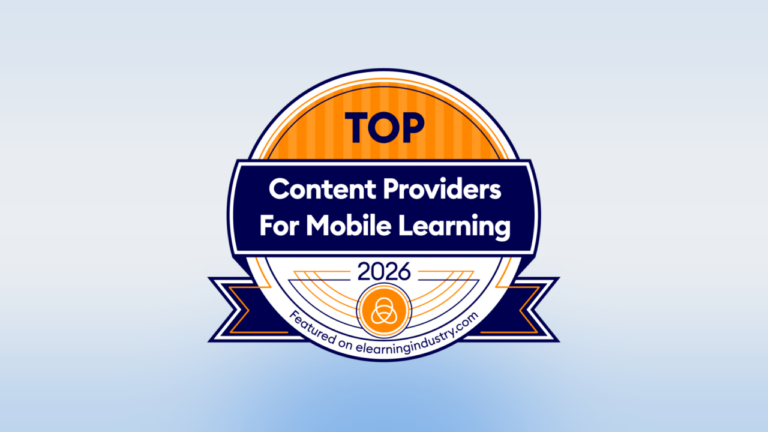
AllenComm Earns Spot on Best Mobile Learning Content Providers 2026 List
eLearning Industry honors AllenComm for its custom mobile learning solutions for enterprise, built to improve performance outcomes at scale. SALT LAKE CITY, [July 29, 2026] — AllenComm has been named to eLearning Industry’s...
ALLENCOMM Press Releases
AllenComm Named a Top Employee Engagement Training Provider by eLearning Industry
AllenComm has been recognized by eLearning Industry as a 2026 top provider for employee engagement, cited for scalable, personalized L&D that drives measurable results. SALT LAKE CITY, [June 24, 2026]...
ALLENCOMM Press Releases