

ALLENCOMM BLOG | Podcast
EPISODE 5: GOOD TRAINING BUILDS BRAND CREDIBILITY
November 19, 2024
In this conversation, Ron Zamir and John Nelson discuss the transformative impact of the USA Clay Target League on youth sports and education. They explore the journey of the organization, innovative training methods, the importance of safety, and the challenges faced in promoting clay target shooting as a recognized sport. The discussion highlights the significance of engaging both students and instructors in the learning process, overcoming resistance to change, and the broader community impact of their mission.
Takeaways
- Effective training builds brands & opens doors
- The USA Clay Target League prioritizes safety, fun, and marksmanship.
- Innovative training methods are essential for engaging youth in sports.
- Balancing self-paced and live training enhances learning outcomes.
- Interactive learning is crucial for student engagement.
- Resistance to change often comes from traditionalist instructors.
- Branding efforts focus on proving the safety and inclusivity of the sport.
- Nonprofit leadership requires a focus on mission over profit.
- Engaging young people in sports leads to better life outcomes.
- Mentorship plays a vital role in youth development.
- Innovation can manifest in small, everyday changes.
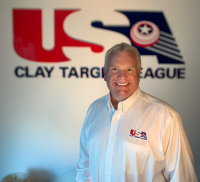
About John Nelson, President, USA Clay Target
After working in the advertising agency business for more than 25 years, John started his journey with the USA Clay Target League at the kitchen table when the Minnesota State High School Clay Target League was formed in 2008. Since then he has served as a board of director member and has been president since 2018.
Ron Zamir
Well, hello everybody. This is Ron Zamir, CEO of AllenComm. This is our fifth podcast where we talk about change, where we bring together some of our amazing customers, some luminaries in the industry, and talk about how learning and education not only changes your organization, but how you as a practitioner can impact change in your organization.
I am thrilled today to be joined by John Nelson. John will introduce himself in a second, but I’ll say a few words. John is one of our nonprofit clients. AllenComm has really had good success impacting the nonprofit world in areas from medicine to nursing to sports to even construction. So we’re really proud of having this part of our business and being able to showcase that business.
I’ll let John talk about himself, and then we’re to get right into it. Thank you all for joining us. Okay, John, let me hand it over to you for a bit.
John Nelson
All right, Ron, thank you so much for having me on today. It’s quite a pleasure to be here and we’re honored to be part of the AllenComm client side of it, especially on the nonprofits. But what’s unique is the USA Clay Target League is a nonprofit organization that provides clay target shooting sports to student athletes in high school and colleges. Our priorities since day one have always been safety, fun, and marksmanship.
As a nonprofit since about 2008 and in this past year, we have hosted more than 50,000 student athletes and 10,000 coaches and staff members. We’re the largest clay target shooting sport organization in the country. And we continue to grow every single year.
Ron Zamir
One of the pleasures of working with nonprofits, and I’m sure everybody knows, is you get to really impact people much more directly. Sometimes when you work for a large corporation, you’re not sure, will the project go, will the project reach people? We found that with our nonprofits, they’re motivated to really make an impact on their learners.
So John, you’ve been with clay shooting for a while. Share a bit of your journey. What brought you to that organization, and how do you feel? Your organization is really impacting the students and the instructors that you serve.
John Nelson
Well, it’s been quite a ride. It really started back in 1990 when I was working for an ad agency and I was hired by the president whose name was Jim Sable. After working with Jim for 10 years, Jim decided to retire to spend more time in his local shooting range where he enjoyed the sport of trap shooting. When Jim got to the club, he realized that he was one of the younger members at the club at the age of 60. He realized that the future of shooting sports and hunting participation was on a decline for many decades. And if somebody didn’t do anything about it, the future of the sport was in jeopardy.
Jim started with a couple of handfuls of kids at his local club to create this sport. What he realized is these kids were from some different high schools. So Jim eventually had the idea to create a high school clay target league. And that’s when he engaged me, because Jim and I had worked together for so long, to try to work with some people and some experts in the industry to really understand how to make clay target shooting sports look and smell and taste like just a high school sport.
So here in our home state of Minnesota, we work with the Minnesota State High School League and they were more than happy to help us get there. And that’s where it all started.
Ron Zamir
Well, that’s great. And again, I like to emphasize that it doesn’t take much to make a difference. Sometimes it starts small, but then a lot of our professionals—anybody that’s in training, anybody that’s in education—we try to help organizations scale.
Talk about what kind of brought you guys to look at the way you would need to educate and train your audience, both instructors and the actual kids themselves.
John Nelson
Where we started is the hunting and shooting sport industry has been doing the same thing for decades upon decades, which was classroom training and in-person training. You had to have volunteers from the Department of Natural Resources in order to teach gun safety to these kids. So where we try to get more innovative is how could we increase our reach and our frequency to our audience? How can we provide training tools for clay target shooting?
One of the things that we learned early in our days is the hunter education program. All of our kids require some type of certification to participate in the league and that’s in regards to firearm safety. But with the hunter education courses that were available out there, in particular the ones that are run by state agencies, about 75% of that content is focused around hunting, where 25% of it is around firearm safety. There was 0% about clay target shooting.
Where we want to take a different approach is how do we teach athletes the sport of clay target shooting while understanding the firearm safety components specific to clay target shooting. At the same time, trying to teach the coaches the same thing. As we would say in our business kind of singing from the same hymnal as we have everyone that’s participating in the sport that understands the policies and procedures that are in place to make it so safe.
Ron Zamir
You bring up a great topic because safety in general, if I look at even the corporate world, there’s always the trade-off in scale, how you can teach people or impress on them the rules of safety and what they can and cannot do or what they should and shouldn’t do. And then the actual application in the field where they’re able to practice those safeties.
How did you see balancing out the aspect of creating those safety modules, but also providing on-site safety within the live class?
John Nelson
A big part of that, I think, we’re relying on the professionals that have been teaching this for so long. The basics of firearm safety have not changed over the decades. How we deliver that message has changed to that audience.
Ron Zamir
Share a bit about how you guys balanced the self-paced and the live aspects of your program.
John Nelson
Yeah, a big part of that is simply is teaching the basics. And regardless of where our student athletes are learning those basics, whether it’s through a state agency firearm safety course, or whether it’s through our course, or whether it’s just something that they’re learning from family members or others at the shooting sport community out at shooting ranges, is there are some basic modes that are being taught. That’s primarily what our training programs have always focused around is to do the basics.
Once we get that certification process through either the staff members or the athletes, then we take that out to the field. We want those athletes in order to complete their certifications to actually feel what it’s like to pull the trigger on a shotgun and what it’s like to shoot at a clay target, what it’s like to carry a firearm or ammunition and how to handle that. And that’s where we rely on the coaches and the staff members who have experience on that side of it to teach those skills and knowledge.
Ron Zamir
We’re big fans of that ability to blend the self-paced and the live and how one reinforces the other. For many of our clients, it’s all about scale. We often will take stuff that’s been done in person, totally, and move it to more of a ratio, a 60-40 or a 70-30 type ratio.
Let’s talk a bit about innovation.
John Nelson
Innovation has become and where we—a lot of this in the recent development of this was really in our understanding is what is the learning process? Is what do we do is to take those audiences and how do we teach them? And then eventually is how do we get them engaged into activities? And then how do we validate activities and what they’ve learned throughout the learning lessons in our particular case for that?
I think that’s what’s changed the most is the engagement of interactive components, interactive learning things, versus just sitting there with a book or sitting there with a presentation up on a screen and saying, learn this without any interaction from our audience.
Ron Zamir
Yeah, and again, the history has been either you listen passively to somebody talking in a live setting or you click on a video and you let that video run and ask a few questions. Of course, that hasn’t changed much probably in the last 50, 60 years, but now with better methods of micro-boosting and small interactivity, we can entertain that.
Talk a bit about what you’re hearing from the instructors. Have you had any resistance from instructors kind of doing it differently or have they been allies in the process?
John Nelson
We’ve had some resistance and that’s because it comes from an audience who’s—the resistance comes from the coaches more than it would the athletes because they’ve never been through this process before.
But for the coaches who are traditionalists in teaching hunter education, who have been out in the field for years or even decades, many decades in some of these cases, is teach our athletes. Therefore, we think it’s important for you to understand what we teach to them. So then when you go out on the field and we talk about those procedures, there’s consistencies and what those expectations are.
Then of course we inspect what they expect. That way there’s really nothing that’s going to change from the policies and procedures that we as a league understand. And they go out to that field.
Ron Zamir
Talk a bit about the kids.
John Nelson
Well, obviously as they’re learning and what they are trying to do is a vast mode. think that’s what’s so unique about our two different modules that we have within our certification is you have a pretty older, well acquainted audiences. It relates to our coaches. Then you have a bunch of kids. And so you have two completely different learning mode audiences.
What’s unique about the kids is 60% of the kids that join this league have never been exposed to clay target shooting sports. So for them, their first exposure is through this online component that we can not only demonstrate what they are about to experience on the field, but we can teach them everything to get to that field. And to ensure that our safety procedures are being followed.
Kids on the other hand want to try to take training courses at 75 miles an hour just so they can get through so they can get out to the field. We’re working on ways to help improve that experience and to help those kids stay more engaged.
Ron Zamir
Often when we run to change, sometimes we end up fixing and sometimes we end up breaking. Is there anything in your experience of pushing this change through your organization that you feel made things better, or let’s be contrarian, were the things that made things not as optimal or worse?
John Nelson
We’ve certainly made it better. I say that because this industry has been working in, I’ll just call it dinosaur age for so many decades, that when you have a young interactive audience such as ours it has to be better than what’s been done previously. Because if things were so perfect previously, then we wouldn’t have the issues of participating in shooting sports and hunting.
And so with today’s challenges and trying to get young people involved in these extracurricular activities, certainly in outdoor ones versus sitting on one on a couch on a computer doing video games, it’s so important for us to get them out and get them engaged in the league, get them engaged in these outdoor activities, because it’s going to benefit everyone who’s involved.
Ron Zamir
It’s really, really important. We talk a lot about, definitely in the nonprofit world where sometimes nonprofits have to be very narrowly focused. And that’s good. You have a mission, right? Your mission is clay shooting. But you mentioned a few things that I want to bring up, and this again should be very relevant to anybody. Sometimes when you go to teach a specific skill, you’re also teaching other skills.
You’re not just teaching safety, you’re teaching teamwork, you’re teaching respect. And you’re also creating a brand through that education process. How is this program helping you brand USA Clay better in the market?
John Nelson
Well, what’s really helped us, and the challenges have been really started in day one when we started with the mission of this organization, because what was most important to us is these young people could get recognized by their schools in a school-sponsored sport. They could be featured in a yearbook. They could have a lettering program, everything associated with the school, because research has also stated that any young people that are involved in school-sponsored sports do better in life. More tend to go to college, stay away from alcohol and drugs, do better grades.
And so, really our mission has not changed since day one. When you have passionate people with your mission, not only as team staff members within our group, but the 10,000+ coaches that believe in that same mission that are helping these young people, that’s where the brand has really helped.
From our perspective is, it’s been a challenge. As you can understand, anytime you mix guns, kids in schools, you’re going to have some people who have negative perceptions about that. The way we change that is through proof of performance and demonstrating that this is a safe sport. It is great, it is inclusive, and it fits everything that a school’s looking for when it comes to activities.
Ron Zamir
That’s insightful. I think we get so many more benefits that we don’t anticipate sometimes. And even the benefit of maybe repositioning how people see firearms in a sport versus a lot of the news that we deal with as a country.
You mentioned in the beginning, which I find fascinating, and again, the context for me is many people come into the learning discipline from other parts of corporate America. They may have been practitioners, salespeople, operations, HR, and then they’re suddenly either thrust not even by title to doing or to leading something that relates to education and training.
Now, you came from a marketing background, right? And then you became a CEO and a leader of organization. How did you feel and what brought you on to thrust yourself into an activity which is basically creating training and education?
John Nelson
When you come from a for-profit corporation that I worked for many years, and then you transition over to the nonprofit, running the business is really no different. You still have to pay the bills. You still have to do what you have to do. And everything is focused on that.
But I think the biggest difference is, rather than having stakeholders that are concerned about sales and market share and profits, when you go out and you see the effects of what your mission is having on these young people and their families and what’s happening right at their local levels, and how an athlete has been able to go out and hunt for the first time or was able to get into a wheelchair and shoot for the first time, that wouldn’t have started without the ability to get them out on that field, which all starts with the training and the certification process in our case.
So by allowing those opportunities for these people, having no idea what they’re getting into and then to see the benefits of that as they’re in this league for one or five or even six seven years. It’s changing people’s lives. When you talk to the people and what this sport has done to it and the coaches that influence these people as mentors, it’s so much beyond just trying to hit a clay target.
Ron Zamir
That’s true. I think many of our listeners who have kids, definitely in the high school age, realize that getting them involved outside the classroom, getting not just that teacher-student relationship, but that student-coach relationship, is a really critical life lesson. I think many of us remember our favorite teacher, and a lot of us remember that minute where a coach really impacted our lives.
Well, I’m going to go to the last question, which is one of my favorite questions, something I wish I would ask myself more often, is knowing what you know now, looking back. When you started, I think it was close to 12 years ago with USA Clay, what would you tell yourself in hindsight? And how could that inform people in how they should look at their current jobs?
John Nelson
We think about this often because of the challenges that we faced in early days. As you can imagine, we went into schools and talked to athletic directors, superintendents, principals, school boards, and we told them about this great opportunity that we had for kids. And by the time we got done with our sales pitch at the end of it, we would say, by the way, this involves a shotgun. And wow, the doors couldn’t get closed behind us fast enough as they’re throwing us out of the school saying there’s no way that this would happen.
But what we did is, it motivated us more to really do what we wanted to do based on the mission that we set forth. So what we relied on, similar to what we did within our certification and truly what AllenComm provided too, is we relied on experts to guide us on what we had to do next when we faced these challenges.
What were the resources available to help us along? And also we looked at is how do we just climb over that next hurdle versus climbing the mountain in a single bound? It was because of some key people, some key resources, some key mentors in our early days that showed us the way, told us what to do, and we listened to them. They were the ones that were key to our success.
By understanding our mission, having the heart to stick with it, not being afraid to be told no, and look forward to the next yes. That’s really in the hindsight. Anyone who’s out there that’s chasing a business dream and a goal out there or a mission similar to ours, don’t lose focus of that. Keep pursuing it. Don’t quit.
Ron Zamir
Yeah, it resonates. It does, John. You know, so many people in the learning and development profession inside a corporation, they’re told no more than they’re told yes. They’re told no about budgets. They’re told no about resources. They’re told no about the time they need to do something.
When we look at the successful organizations and Clay and others, it’s where you know how to search for that yes. Like you said, when you know how to look for a success that can breed a success. And maybe that is the secret of innovation.
Innovation, we’re not all Elon Musk. It doesn’t come always in a big way. But there’s innovation every day. And when you’re innovating by introducing a new approach like you have to teaching safety, that’s an innovation. When you’re innovative in helping maybe your subject matter experts, in your case your instructors, see that things can be done differently, that’s an innovation. And frankly, when you, as somebody who’s been running a company and you have a real true mission, a service-based mission, when you can refresh yourself and do something that makes your job even more fun.
And with that, I want to thank you. We don’t thank our partners and customers enough for letting us be part of their world. And I want to thank you for joining me here and letting you come into our world a little bit. It was a pleasure, John.
John Nelson
It was a pleasure, Ron. Thank you very much. We wish the best for everyone out there that’s chasing the same dream that we have for as long as we have.
Ron Zamir
Well, I haven’t shot a clay pigeon since I was probably in summer camp, being 12 years old. So now you’ve made me think, what am I missing? So anyway, thank you so much. This has been great.
John Nelson
All right, Ron, thank you.




Resources For L&D Leaders

free guide
free guide
insights | on the blog

ALLENCOMM Press Releases
AllenComm Earns Spot on Best Mobile Learning Content Providers 2026 List
eLearning Industry honors AllenComm for its custom mobile learning solutions for enterprise, built to improve performance outcomes at scale. SALT LAKE CITY, [July 29, 2026] — AllenComm has been named to eLearning Industry’s...
ALLENCOMM Press Releases
AllenComm Named a Top Employee Engagement Training Provider by eLearning Industry
AllenComm has been recognized by eLearning Industry as a 2026 top provider for employee engagement, cited for scalable, personalized L&D that drives measurable results. SALT LAKE CITY, [June 24, 2026]...
ALLENCOMM Press Releases