

ALLENCOMM BLOG | Podcast
EPISODE 9: TRANSFORMING MANUFACTURING TRAINING WITH TECH
December 17, 2024
Many organizations struggle with retention, or they risk losing vital knowledge when their experienced team members retire. But there are actions L&D leaders like you can take now to bridge the gap. Michael Noble, VP of AllenComm Advisory, meets with Teresa Taylor, a regional operations manager at McElroy Metal, to explore ways in which leaders can foster a sense of belonging while overcoming the unique challenges of training in a manufacturing environment. Their insights focus on strengthening the future of learning by capturing knowledge, standardizing processes, and supporting the next generation of team members as they discover their personal value within an organization’s legacy.
Top Takeaways
- McElroy Metal has transitioned to an employee-owned company, maintaining a family-oriented culture.
- Change in manufacturing is essential for improving operations and efficiency.
- Onboarding processes were revamped to provide consistent and professional training across all plants.
- Technology is being integrated into training to attract younger workers and improve efficiency.
- Capturing tribal knowledge is crucial as the workforce ages and experienced workers retire.
- Resistance to change is common, but can be managed with proper support and communication.
- The use of technology in training can enhance learning and accessibility for employees.
- Collaboration with external partners can provide necessary expertise in technology and training.
- Continuous improvement is a key focus for operations management in manufacturing.
- Future training initiatives will focus on updating SOPs and job aids for better resource accessibility.
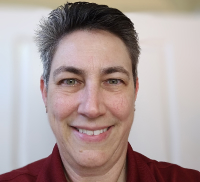
Teresa Taylor: Regional Operations Manager at McElroy Metal
Teresa Taylor’s career reflects a dedication to growth and empowering others. Starting in accounting after graduating from Shepherd University in 1990, she quickly rose through the ranks at McElroy Metal, transitioning from accounting roles to operations management. For over a decade, she managed operations at the plant and regional levels, overseeing up to six plants simultaneously.
Currently, Teresa focuses on company-wide training, supporting 14 plants. A key accomplishment includes partnering to develop a bilingual, web-based onboarding program for the Operations Team. Outside of work, Teresa enjoys spending time at Disney World, cheering on the Washington Nationals, and caring for her three rescue dogs with her wife, Becca.
Michael Noble
Welcome to another episode of the Learner Experience Evolution. I’m Michael Noble, VP of AllenComm Advisory, and I’m your host for this episode. Our guest today is Teresa Taylor. We’re really excited to have Teresa with us.
Teresa is a Regional Operations Manager for McElroy Metal. She’s worked with AllenComm in the past. We worked together on a program for role- and a task-specific onboarding and manufacturing. So I already know we’re going to have a great conversation because their program is so nice.
But let’s get started. Welcome, Teresa.
Teresa Taylor
Well, thanks Michael, I’m happy to be here.
Michael Noble
Can you tell us a little bit about McElroy Metal and the work that you do there?
Teresa Taylor
Absolutely. McElroy Metal is a metal components manufacturer. We’ve been in business since 1963. We serve several markets, including architectural, agricultural, commercial, and residential markets. So we cover just about any kind of building that you can come across. If you’re riding down the road, anything that you see, we probably touch that market and can put metal on it.
McElroy has been family owned. We’re in the third generation. Until 2022, when the McElroy family decided to make all of us employees owners. So now we’re an employee owned or ESOP company. The culture has been and still remains family oriented. While we’ve changed to an ESOP, we still have that family-oriented kind of culture and feel at all of our plants. We do have 14 manufacturing facilities across the United States. So that family culture has permeated kind of throughout our whole company and all of our plants and facilities.
As for me, I’ve been with McElroy for 33 years. I like to say that I started when I was six years old, so you know, still kind of young. In that time, I’ve served 12 years as an administrative leader. 12 years of my time has been as an operations manager. All of that has been at our Winchester, Virginia facility.
My current title is, as you mentioned, a Regional Operations Manager of which I’ve been in for nine years. My role right now is to support our operations team in the areas of quality, administration, and also with training resources. So, my background lends itself, having been in administration and operations for many years, it kind of lends my experience to being able to help our teams across several different aspects.
Michael Noble
That reminds me of something that I want to mention. I think sometimes in L&D, and especially in just the way that the art industry talks about itself, we focus a lot on like desk workers and knowledge workers, and we don’t focus a lot on manufacturing. And yet manufacturing has been going through a digital transformation as significant as the transformation for people in offices. They don’t get as much — we don’t talk about that change as much.
The focus of our podcast is on change, and change in learning in particular. So, I’m really excited to have your perspective. I’d love to hear a little bit, now like zooming in a little bit on learning change in your organization. You’ve mentioned a little bit some of the changes that have happened, but how do you view that intersection of change and learning in the work that you do?
Teresa Taylor
Yeah, I mean, I feel like being a change agent is kind of baked into my role. So, what I mean is that I want us to change to improve, improve our operations.
As I mentioned, I’m in the quality, administration, that is all into my role. We need to be improving in all of those areas. So, I want us to improve, you know, change to improve, not just to change, just because we want to change. I want us to be exploring new and innovative ways to bring resources to our teams. We’re always looking for not only ways to manufacture our products differently by using technology, but also how can we bring resources into the hands of our users, of our operators, of the people that are on our plant floor.
So those are some things that are challenging, I feel like, in manufacturing. But we have partnered with AllenComm to help us understand some of those ways that we can do that. We probably are thinking a little bit outside of the box than we’re normally used to thinking. I kind of joked with the team as we’ve been through this, we manufacture, we make products, we don’t do technology. That’s not what our forte is. We knew we needed somebody to help us with that.
But I’m constantly involved in projects and with people who are trying to uncover new ways of performing some of our old processes, just so we can be more efficient. I mean, the bottom line is we want to be more efficient and better at what we’re doing so we can serve our customers better and in a more timely manner.
Our industry is one that, you know, it gets saturated with a lot of competition, and we’re all in it to try and get it to the end user quicker than the other. So, if we can be more efficient and serve our customers better, then we have a bigger opportunity for the—a bigger piece of the pie, so to speak.
Michael Noble
Well, and I think in some of that rationale, some of that why, I mean, I’m sure that ties in with if we look back at the origin story for the project that we did together, maybe you could tell us a little bit about the conditions at the beginning and what had you thinking, hey, let’s bring in some guidance to help us realize our vision. Tell me a little bit about what the conditions look like, what that current state was, what the organization needed, what learners needed.
Teresa Taylor
We did a couple different things. Our initial project, or phase, we called it phase one, we covered two distinct areas. One was our onboarding, and one we called—it was just kind of a, we wanted to try it out. We wanted to dip our toe in, right? So that was something more specific to our plant floor. But in regards to onboarding, we recognized we needed a way to consistently share our history and information about the company in a professional manner across all of our plants.
We realized we relied too much on the individual plant teams to bring that information to new people. So, what we found was happening was we were missing data, and that was the best case. And at worst case, it was non-existent. We would bring somebody in, they’d start on a Monday and go to the plant floor and have at it, shake their hand and wish them well kind of thing. So, we wanted to make sure that we were kind of welcoming people in a better manner.
The onboarding we developed with AllenComm is—actually has, it didn’t at the beginning—but it has become part of a larger onboarding structure that we have put together. And it’s been developed for all of our plants to follow. What I mean by that structure is that we have kind of choreographed the first day, the first week, the first month of what it looks like for a new person coming into our plant, to McElroy.
The web-based course we developed is one of the first things that new people see on their very first day. So we kind of hit them the first day with welcoming them and giving them a professional web-based course that they can go through that gives them a lot of really good company information. And it’s kind of a self-paced thing, but the seat time is only about 20 minutes. So it’s not like it’s way in-depth, but it gives them some really good interactive information that they can navigate through on their own.
The onboarding course we built, it was—we developed it in operations, so it’s operations leaning, but we built it such that we could use it in other departments, and we’ve already deployed that to our customer service team, so we’re already realizing the benefit of having that available for other departments.
The other piece to phase one was a more specialized training program and that was one of our specific product lines in Max Rib. Going back to thinking about why we wanted to do this, you mentioned it earlier about we don’t think about manufacturing as far as change and that sort of thing.
Unfortunately, too, manufacturing is not as attractive to younger workers these days. It’s just something, we have this, there’s this context about manufacturing that it’s dirty. It’s always hot, it’s not fun or anything like that. So, because of that we have an aging workforce. We knew and we still know we have to find ways to capture what we call tribal knowledge.
We have relied on training to happen as hands-on, and we expect that smaller number of experienced people to go around and train everybody. And we’re losing some of that tribal knowledge to retirement, so it’s harder and harder for that smaller number of people to get out there and do that hands-on training.
As I mentioned earlier, younger workers were really kind of, I don’t want to say afraid, but apprehensive about manufacturing. We also recognize if we want to be at least somewhat attractive to younger workers, we needed to add technology where we could. So, we built the specialized training to be viewed on tablets that we have available on the plant floor. They can scan a QR code to bring them to the course on our LMS. They can sign on with their own user login, so that tracks how we’re using it, how often we’re using it, those sorts of things. And they can do that right on the plant floor.
Having that ability really kind of puts that power in the hands of our operators and the people on the floor. So, the thought kind of process was we wanted the courses not only to be used for new team members, but also available later for resources that could be reviewed if needed. We have a lot of our SOPs that are linked, they can get to that through the LMS and through the QR code.
With that in mind, we made our modules short for that reason so that they could be used on the go as somebody’s maybe trying to remember, “I knew it was five steps, but I can only remember four of them,” and they don’t have to wait for somebody more experienced to be available.
That was all part of phase one, but one of the coolest things that we pulled off was in phase two, and that was for our Loading training program. We wanted users, especially new users, to be able to learn the concepts of loading our products onto a flatbed trailer via a computerized program.
We have to load with an overhead crane. If they can get this concept via computer, they don’t have to actually use the overhead crane when they’re green and really don’t know what they’re doing with that. So, we use real loads. And the AllenComm team was able to deliver what we wanted.
Users can view the load information. Then they’ll use computer-generated objects that look almost exactly like our real product bundles, and they can drag and drop them onto a trailer. That was, I know you asked about the beginning of it, but that was something really, really cool that we did that I think really kind of stretched us and maybe stretched the AllenComm team a little bit too. So maybe a little bit of change on both sides.
Michael Noble
Definitely, definitely. I’m going to sum up three things that you just said that I want to amplify. The first of those was about, like over the last 10 years, every manufacturing client I’ve worked with has had a similar challenge in terms of how do we capture the tribal knowledge from this generation, that was factory worker, and how do we shift the experience for that next generation coming in?
I think that’s relevant to most of the manufacturing environments, at least the ones that I’ve talked to, like I said, over the last 10 years or so. And I think that the second point there that you made for me is about the proximity between the work environment and the training. I think in the past, it was like, we go to training and that’s going to a training room or it’s going somewhere away from the factory floor. You don’t have access to those tools when you’re on the factory floor. And that’s changed significantly over the last 10 years or so.
Even something as simple as, here’s a QR code, here’s a piece of equipment that has a code on it. To be able to connect, and there’s high-tech ways of doing it, and there’s lower-tech ways of doing it, but the idea that you can actually close that delta between that training environment and the work environment so there’s more relevance for learners. I think that is absolutely essential.
And then that third point, which is the last one where you ended up, which is, hey, just because it’s manufacturing doesn’t mean you can’t do a really cool simulation of the environment. In fact, the use case you gave is the perfect example of where the equipment’s expensive, using it is dangerous, right? It’s also not readily—there’s not cranes everywhere for everyone to learn this, like in the moment of need.
And so being able to simulate that in a way that has some verisimilitude or that’s like the work environment, at least to get them ready for the live practice with the equipment, I think is a great use case there.
Michael Noble
Now, along the way, you’re dealing with a major culture shift, not just the shift in generations, but it’s like, now we’re introducing training technology and for the most part even today when you survey people, they want to learn from other humans. They’re reluctant to try some new ways of doing things. Tell us if there was resistance, what the nature of the resistance was like, and how you kind of tackled that?
Teresa Taylor
Right, well I would love to tell you that there was no resistance whatsoever, but certainly there was. I mean, it’s different, it’s change, right? So we all know about change. I wish that everybody would just embrace change and then we could get a lot of stuff done. But you know, I… First off, I did research to identify a partner that could help us with this undertaking. As I mentioned earlier, we’re a manufacturer of metal building components. We don’t do technology. That’s not our forte. So, it was something I knew we needed help with.
And it was quickly apparent to me that AllenComm was a partner we needed. And with the support and help of my boss at the time, I made two presentations to our executive team to garner their support. And we did get it. A little bit of that was politicking. I talked offline to a few of the executive team a little bit. So, you know, just to try and garner some of that support.
But once we were going, the cooperation from the plants where we did filming was phenomenal. The guys that were in front of the camera, they did amazing. I can’t even thank them enough because trying to get people to do that is not always easy. Additionally, the subject matter experts that we asked to participate, they did so with enthusiasm and complete support. So that was a huge part.
Probably the biggest challenge for me from the time of doing the research to assign scope of work, that was a year, or almost a year. McElroy is very deliberate in making decisions, and rightfully so. And I’m just, not a patient person, so I just wanted to go. You know, I’m like, I got the right company to work with, the right partner, let’s go.
And then once we said go, the thing that I wasn’t quite ready for is it goes fast. So, once it was like go, the AllenComm team was like, all right, they’ve got the team in place and we were moving and going. And then it was like, here we go, we’re on our way. So, how fast it went was really kind of the unexpected for me.
Michael Noble
Yeah. So, as you look back, you’ve got the executive buy-in, you have this project ahead of you. What do you wish you had known then that you learned over the course of the process?
Teresa Taylor
I think the biggest thing, is specific to kind of building this type of training that we haven’t had exposure to before, was I wished I would have made sure the information and processes were closer to correct. And what I mean by that, I kind of wish that—there was a lot that we were developing on the fly. And the good thing is the product that we picked first, Max Rib, I’m very familiar with. We produce that at Winchester. I could develop a lot of that on the fly. But as we get into other products that, if I’m involved, I’m not going to be able to develop them on the fly because I won’t be as familiar with them.
That is something I, in fact, we did make that adjustment for the second phase, although they were still two areas that I was still familiar with, we started working once we determined what they were, we started working on SOPs and some of the processes ahead of time to make sure that that we had more of that in place.
Michael Noble
I think that’s also a universal. You just hit on a good number four summary, because if you’ve got that situation where a lot of the knowledge sharing is person to person, then there isn’t that anchor of a core SOP or one way of doing it. And there can be more give on, you know, kind of best practices. It’s fine for an expert to have that flexibility. It’s tricky to learn that as a new learner. I think that’s some good wisdom there.
Our time’s almost up, but I’d love to hear kind of what’s next for you in terms of this particular change journey.
Teresa Taylor
Yeah, so currently we’re in a pause with developing web-based courses, but we’re still focused on bringing training resources to our teams. We’re focused right now on revamping our SOP and job aid structure. We’re giving that a facelift in favor of a cleaner, consistent, kind more modern look that provides as much information as possible in a more concise manner.
Once we do start up again with web-based courses, those updated SOPs and job aids will, they’ll for sure be resources that we use as a link. So, that’s our kind of big focus right now. Things we can do like we just talked about, having all the correct information and the processes documented properly. We’ll take advantage of the time we have right now.
Michael Noble
And it’s all going to be fodder for AI. Let’s get that down. Yeah, no, that’s great. Hey, this has been a pleasure. I think there’s a lot here in our conversation that learning leaders will recognize in kind of their own situation and their own journey of what they need to do, a lot to learn from, from kind of what you’ve been leading at McElroy Metal. Thanks for sharing your time and your expertise with us. I hope you’ll join us again after phase three of your project.
Teresa Taylor
Sure, absolutely. It’s been great, Michael. Thank you so much.
Michael Noble
You’re very welcome. And listeners, thank you for joining us again. Please tell your friends about us and drop us a line at info@allencomm.com if you have ideas or questions about our podcast. Thanks everybody.
The Learner Experience Evolution is a weekly podcast for L&D learning leaders to stay inspired and gain valuable insights from other industry leaders. Subscribe now to never miss an episode wherever you listen to your podcasts.



Resources For L&D Leaders
free guide
free guide
insights | on the blog
ALLENCOMM Press Releases
AllenComm Earns Spot on Best Mobile Learning Content Providers 2026 List
eLearning Industry honors AllenComm for its custom mobile learning solutions for enterprise, built to improve performance outcomes at scale. SALT LAKE CITY, [July 29, 2026] — AllenComm has been named to eLearning Industry’s...
ALLENCOMM Press Releases
AllenComm Named a Top Employee Engagement Training Provider by eLearning Industry
AllenComm has been recognized by eLearning Industry as a 2026 top provider for employee engagement, cited for scalable, personalized L&D that drives measurable results. SALT LAKE CITY, [June 24, 2026]...
ALLENCOMM Press Releases