
ALLENCOMM BLOG | Insights
Creating Corporate Compliance Training Employees Actually Remember
December 1, 2025
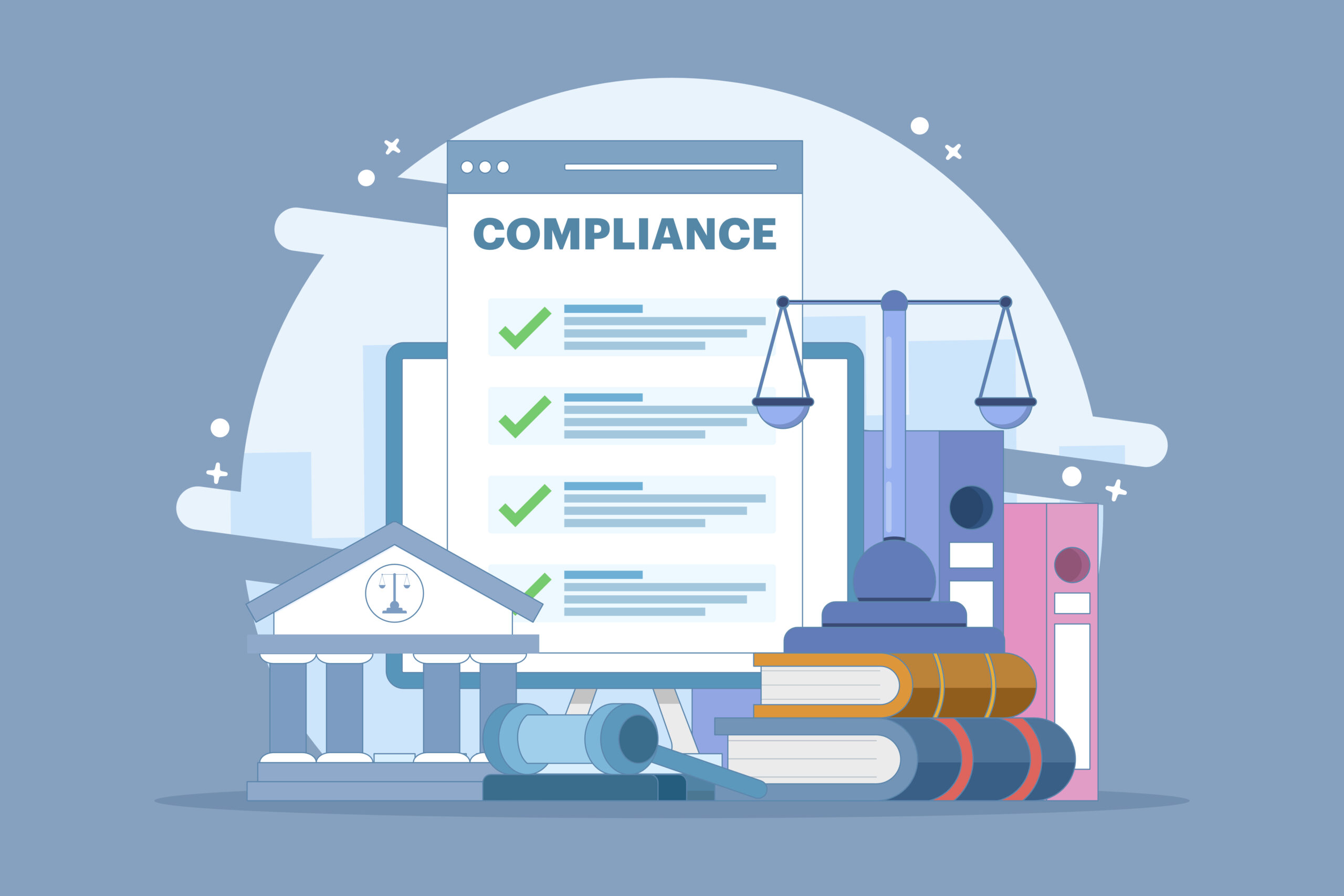
Corporate compliance training has long been seen as a necessary but often uninspiring part of employee development. Let’s face it: in today’s world, there are more regulations than ever to keep up with, and learners are burning out faster than ever. They need learning experiences that do more than check the box — they need compliance learning that’s actually interesting, and that becomes a powerful tool for building an ethical, safe, and high-performing workplace.
We’re here to help learning leaders uncover how to turn their compliance vision into reality, with corporate compliance training employees actually remember, apply, and value. In this article, we also answer key questions such as:
- How to gamify compliance training?
- What are the 7 requirements for an effective compliance program?
- How do you get employees to complete compliance training?
This guide is designed for Learning and Development (L&D) leaders who want to elevate their approach to compliance learning. Whether you’re building compliance training for employees, improving your training and compliance strategy, or implementing a new workplace compliance training program, these actionable insights will help you take the experience to the next level.
Why Traditional Corporate Compliance Training Doesn’t Stick
Most people have experienced dull compliance modules packed with jargon, endless slides, and quizzes that test short-term memory rather than meaningful behavior change.
The result? Well, usually it’s something like …
- Low engagement
- Poor retention
- Uninspired culture around compliance
- Increased operational and regulatory risk
To design employee compliance training that reduces fatigue and that people actually remember, learning leaders must rethink how information is delivered — and how employees experience it. Modern corporate compliance training should be interactive, relevant, experiential, and aligned with real-world risks employees face every day.
But don’t just take our word for it: there’s a psychological basis for why memorable compliance learning makes a difference.
The Psychology Behind Memorable Compliance Learning
Many people may ask, “Is training employees about corporate compliance optional?” Here’s the reality check: compliance training is a must have for organizations, especially as AI and other innovative tools continue to enter the market. But how do you overcome the stigma that mandatory learning, like compliance training, is boring? How do you help employees to actually retain the information they’re given and find value in it?
Employees retain information best when training connects to their values, engages them emotionally, and actively involves them in the learning process. Research highlights that compliance becomes more memorable when it …
- Feels relevant through real-world stories and practical examples that create meaningful context
- Sparks emotional engagement through storytelling, humor, empathy, or even mild stress to enhance recall
- Promotes active participation via interactive exercises to drive deeper cognitive processing
- Reinforces behaviors consistently over time as on unified journey, not a one-off event
- Provides a clear sense of purpose by helping learners understand why the training matters, which increases engagement and responsibility
To truly be effective, these concepts must tie in with the seven requirements for an effective compliance program.
What Are the 7 Requirements for an Effective Compliance Program?
According to OIG’s General Compliance Program Guidance, the seven requirements for an effective compliance program are:
- Written Policies and Procedures: Clear, accessible policies and procedures — including a code of conduct — outline compliance expectations, roles, and processes for all relevant individuals within the organization.
- Compliance Leadership and Oversight: A designated compliance officer and committee, supported by senior leadership and the board, oversee the implementation, operation, and effectiveness of the compliance program.
- Training and Education: Regular, targeted training ensures all employees, contractors, and board members understand the compliance program, relevant laws, and their responsibilities.
- Effective Lines of Communication with the Compliance Officer and Disclosure Program: Open, confidential, and nonretaliatory channels allow personnel to ask questions and report compliance concerns directly to the compliance officer or through anonymous mechanisms.
- Enforcing Standards: Consequences and Incentives: Consistent disciplinary actions for noncompliance and incentives for compliance reinforce the organization’s commitment to ethical conduct and legal requirements.
- Risk Assessment, Auditing, and Monitoring: Ongoing risk assessments, audits, and monitoring activities identify, evaluate, and address compliance risks, ensuring controls are effective and up to date.
- Responding to Detected Offenses and Developing Corrective Action Initiatives: Timely investigation of potential violations, reporting to authorities when necessary, and implementing corrective actions prevent recurrence and strengthen compliance.
So, how exactly can you incorporate these seven elements in your own compliance training? Gamification is a great way to start.
How Do I Gamify Compliance Training?
A groundbreaking study published in the Journal of Innovation & Knowledge reveals that gamified training offers an innovative solution for learning leaders looking to gain traction in today’s fast-paced corporate environment.
The authors found that integrating game mechanics — like points, badges, and leaderboards — into corporate training significantly enhances employee engagement. More than just surface-level motivation, gamification in their mixed-method research boosted knowledge retention, amplified knowledge sharing through collaborative social dynamics, and even translated into measurable improvements in job performance.
So, it’s there’s no doubt that gamification is one of the most powerful tools to increase engagement in compliance learning. But how do you do it? In our 40+ years of experience designing, developing, and measuring the impact of compliance learning, we’ve found that some top methods include:
- Use Points, Badges, and Leaderboards: These reward systems turn progress into motivation.
- Create Narrative-Based Missions: Transform compliance topics into quests or problem-solving journeys with real incidents, ethical dilemmas, emotional consequences, and other reflections that connect to personal values and experiences.
- Integrate Interactive Scenarios: Employees make decisions and see consequences safely.
- Use Time-Based Challenges: Timed knowledge activities heighten focus.
- Encourage Team Competitions: Boost collaboration while generating excitement.
- Reward On-the-Job Compliance Behaviors: Linking learning to real outcomes reinforces application.
Gamification shifts workplace compliance training from passive to participatory, which answers our next question …
How Do You Get Employees to Complete Compliance Training?
Achieving high completion rates is a challenge for many organizations. So, how do you get employees to actually complete compliance training and be invested in it?
We’ll begin by answering another question, “What is the 70-20-10 rule for training and development?” The 70-20-10 model is commonly used in L&D and defines that:
- 70% of learner knowledge is obtained from on-the-job experiences
- 20% comes from social interactions with other people
- 10% is from formal education
With this model in mind, here are seven strategies that make the most of a blend of modalities, from on-the-job experiences to social and formal learning opportunities that engage learners and encourage them to find new value in compliance training — even if they’ve taken it before.
- Make It Relevant: Personalization also plays a key role; adaptive learning technologies can tailor content to each individual’s role, responsibilities, needs, and learning pace. This helps them to personally envision how it relates to their own job. Training becomes even more effective when it incorporates real workplace stories, allowing employees to see themselves in relatable scenarios that boost retention.
- Reduce Complexity: Straightforward navigation and short modules keep learners engaged and make the most of their time, especially for learners in professions where schedules are busy and time is limited. Use clear language that avoids legal jargon and communicates concepts simply and directly.
- Provide Flexible Access: Anytime, anywhere learning removes barriers so learners can complete the training when and how it’s convenient for them. Take it to the next level by designing your learning with specific accessibility requirements in mind, which expands your reach to diverse audiences with different needs so everyone feels set up for success.
- Use Leadership Reinforcement: Stay involved in the process, or encourage managers, team leads, coaches, and other mentors to check in and increase overall accountability. Creating a culture of curiosity and reporting is equally important, ensuring employees feel safe, supported, and encouraged to raise concerns or ask questions.
- Add Incentives or Gamification: Recognition and rewards get people excited about the training, which drives participation and builds momentum over time. It also creates a culture of healthy competition, as employees build confidence, find pride in their performance, and feel motivated to share what they’ve learned with others.
- Communicate Value, Not Just Deadlines: Sharing the value and impact of the learning increases employee buy-in, creates connection, and helps to reduce stress. Instead of limiting compliance learning to annual events, leaders should reinforce key concepts continuously to strengthen long-term understanding and behavior change.
- Track Progress and Automate Reminders: It’s essential to measure what truly matters in compliance learning by tracking indicators such as behavior change, incident frequency, knowledge retention, and cultural shifts — because completion rates alone never tell the full story. Helpful, non-intrusive nudges support follow-through while maintaining each person’s autonomy over their growth.
So, in summary: high engagement comes from giving employees agency, clarity, and relevance. Better yet, you can actually accomplish this without a big budget — which is great for learning leaders looking to do more with less!
Bringing It All Together: Creating Compliance Training That Lasts
To build corporate compliance training employees truly remember, learning leaders must focus on relevance, interactivity, real-world application, continuous reinforcement, and human-centered design.
When compliance training is meaningful rather than mandatory, organizations experience:
- Stronger ethical cultures
- Safer workplaces
- Higher employee confidence
- Reduced risk
- Better organizational performance
Ready to elevate your compliance learning experience? Discover AllenComm’s compliance training solutions and advisory partnership opportunities to get started!
Resources For L&D Leaders
free guide

free guide
insights | on the blog

ALLENCOMM Press Releases
AllenComm Earns Spot on Best Mobile Learning Content Providers 2026 List
eLearning Industry honors AllenComm for its custom mobile learning solutions for enterprise, built to improve performance outcomes at scale. SALT LAKE CITY, [July 29, 2026] — AllenComm has been named to eLearning Industry’s...
ALLENCOMM Press Releases
AllenComm Named a Top Employee Engagement Training Provider by eLearning Industry
AllenComm has been recognized by eLearning Industry as a 2026 top provider for employee engagement, cited for scalable, personalized L&D that drives measurable results. SALT LAKE CITY, [June 24, 2026]...
ALLENCOMM Press Releases