learning tech optimization
Expert Consulting to Optimize Your Learning Tech Ecosystem
meet with a learning expertExpect more from your learning tech ecosystem. AllenComm’s advisory practice in learning technology offers a range of consulting services to help learning leaders unlock the scale, potential, and impact of their learning tech stack.
- Integrate platforms. Eliminate silos. Amplify insight.
- Turn AI potential into practical AI-driven learning innovation.
- Deliver personalized learner experiences—without replacing your tech.
- Simplify your stack to cut redundant licensing and do more.
Optimize Your Tech Stack, Become a Future-Ready Leader
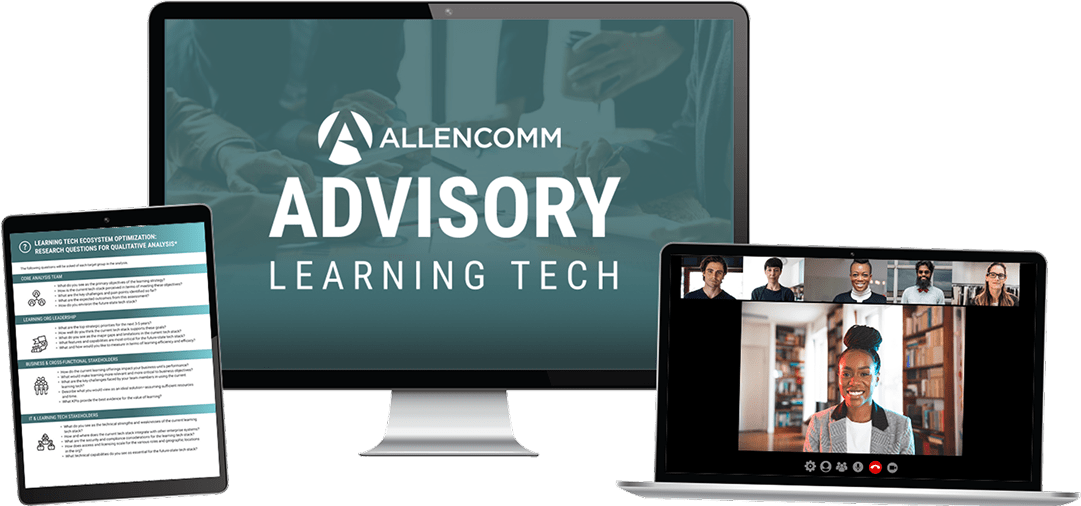
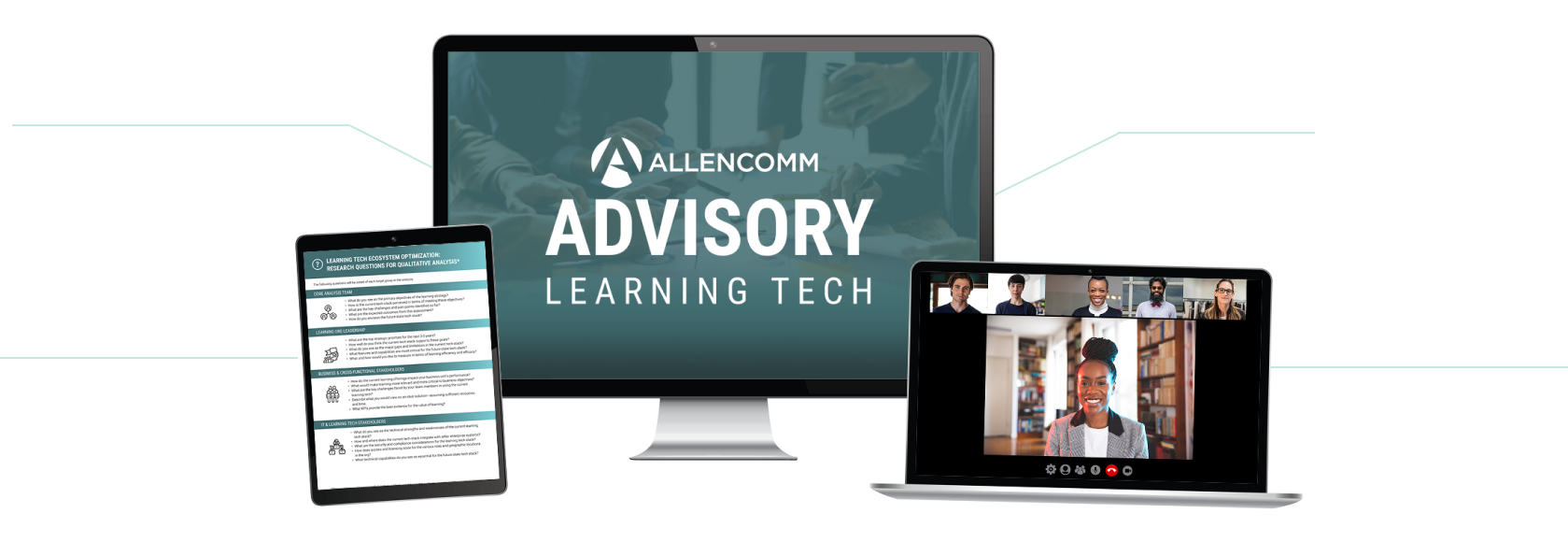
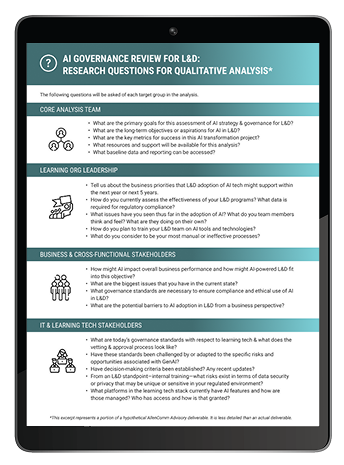
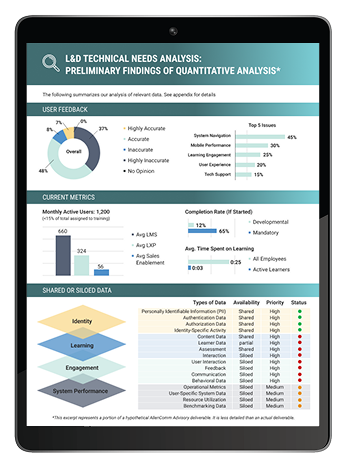
Deliverables Customized for Your Unique Tech Needs & Goals
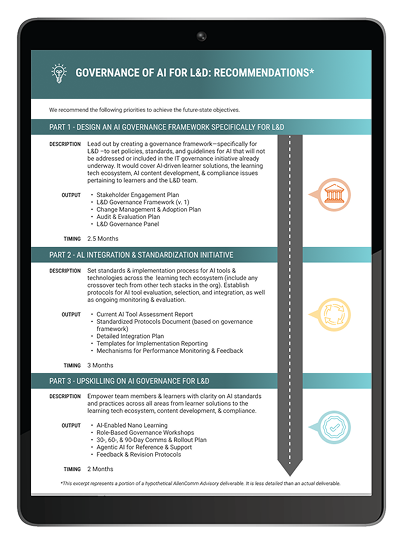
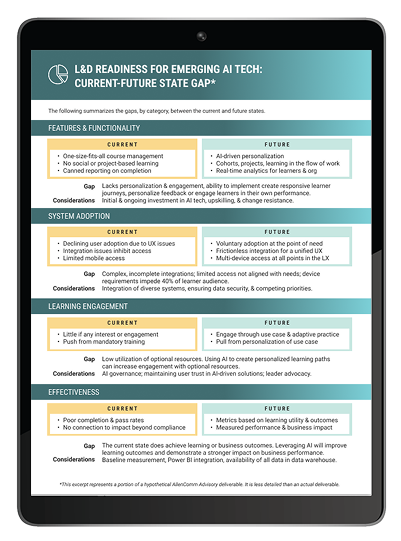
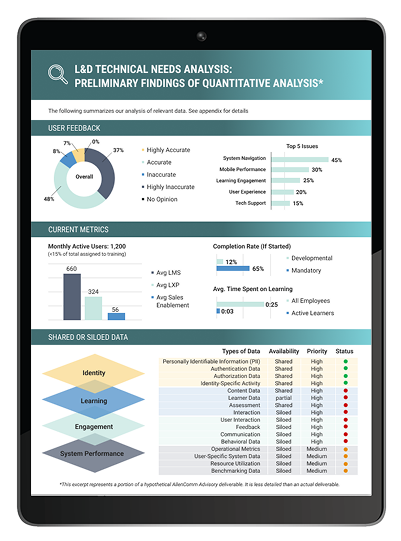
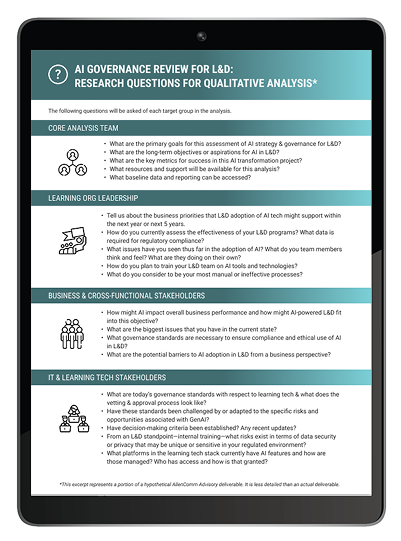
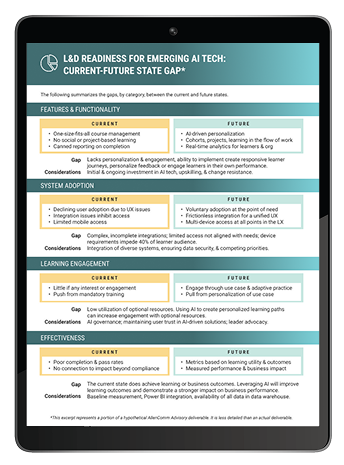
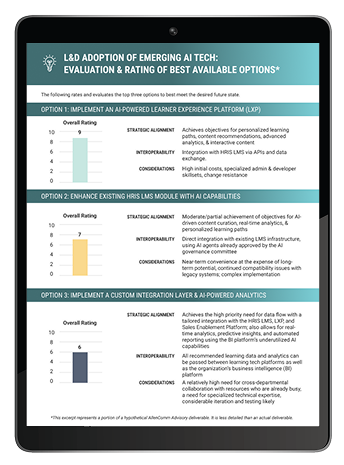
AllenComm isn’t just a learning services provider. We’re a full-service advisory partner that wants to help you get the most out of your tech investments. Our specialists, such as eLearning tech consultants and LMS integration experts, will help you will help you break down your organization’s current state vs. your ideal future state — and provide actionable recommendations to get you there with ease. Along the way, we’ll have four completely customized deliverables to get your initiative started on the right foot.
Our Proven Track Record, Your Success
To truly be successful, tech advisory must be more than just words or hearsay—it requires realistic, step-by-step actions that make a difference in achieving the results you need to see. Our track record of consulting with other partners to optimize their tech stack has given us new perspectives and insights into the unique challenges faced by various industries across the globe. While we can’t highlight our whole portfolio here, we’ve picked out a few examples that show our dedication to bringing these optimized tech ecosystems to life.
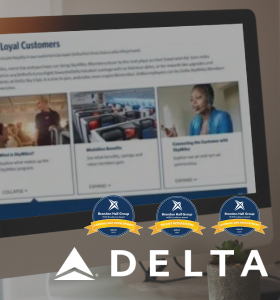
ENHANCED ENGAGEMENT: Delta Air Lines needed to better support cohort programs and collaboration, while tracking performance in meaningful ways. Our recommendations not only enhanced engagement and measurement, but also consolidated tech platforms to save money and allow for additional flexibility & scale for future initiatives.
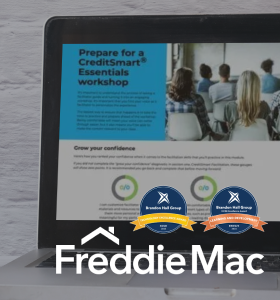
EASE OF USE: Financial education is more important than ever—and requires a different approach for non-employees and the general public. We recommended a personalized learner experience for 500,000+ users that utilizes a simple, localized LMS, enhanced admin functionality, and custom integrations to better support these learners.
GREATER INTEGRATION: Having centralized, streamlined tech access is critical for cross-team coordination. In collaboration with HPE, we recommended data lake, SSO, and integrations with other platforms to personalize learning, gather metrics to prove ROI, and facilitate the hosting of live events for an enhanced overall experience.
Learning Tech Advisory for Scalable, Integrated Ecosystems
Most learning technology teams face an exciting but daunting challenge—how to keep pace with innovation while providing an environment that learning organizations and their learners can use. Our learning tech advisory services (with both hybrid & digital learning platform advisory expertise) can help you evaluate the technical needs of your organization, map out the current ecosystem, and recommend the best tools and integrations to suit your requirements.
Enterprise Tech Needs Analysis
The purpose of an enterprise tech needs analysis is to evaluate the learning technology infrastructure of the organization and to identify critical gaps that limit the distribution, efficacy, or reporting of learning programs. This assessment leads clients in making future-ready technology decisions.
Process
- Conduct stakeholder interviews and gather needs related to the limits and opportunities of learning technology in the organization
- Create a learning tech capabilities matrix that lists the features and functions supporting organizational needs
- Analyze existing platforms used to collect, store, and share learning data, identifying areas where data may be missing or where systems may lack integration
Outcomes
- Deliver a learning tech needs and objective report that summarizes findings and outlines the organization’s current challenges and prioritized needs
- Present a learning tech gap analysis that highlights missing functionality not represented in the tech capabilities matrix
- Lay out a tech recommendations roadmap that categorizes recommendations based on urgency, available resources, and potential impact, serving as a step-by-step guide to achieving the desired outcomes
Ecosystem Design
Ecosystem mapping and design entails the creation of a comprehensive blueprint for an optimized learning tech environment that considers the organization’s goals, audience profile, existing technologies, etc. It results in a roadmap for creating a seamless and future-ready learning ecosystem.
Process
- Conduct an inventory of all learning tech used across the organization, detailing how the tools integrate and function together while also revealing redundancies, siloed functionality, etc.
- Map out the typical learning journeys of different learner segments and the required technologies to support these journeys
- Plan for future technology selection and integration, considering emerging trends (such as AI), accepted practices, and demand for new functionality
Outcomes
- Design a learning ecosystem map that lays out the current and future technology ecosystem for the organization, including recommended tools, their functionalities, and key integrations
- Deliver a guide for learning journey tech integration to support each stage of the many learning journeys that will be supported by the ecosystem
- Lay out an implementation and change readiness roadmap that outlines the steps to ensure user adoption and to maximize the impact of the new learning ecosystem
Platform & Tool Selection
To recommend the best learning technology for your ecosystem, an AllenComm learning tech advisory can analyze your specific needs and available resources to select platforms, applications, and Web services that integrate with your existing ecosystem.
Process
- Compare learning needs to available tools within the learning infrastructure to find areas where new tools (or training on legacy tools) may be needed
- Shortlist recommended technologies based on needs and established decision criteria, such as functionality, scale, interoperability, and user experience
- Facilitate demos and proof-of-concept testing by working with shortlisted vendors to develop sample projects for hands-on evaluation
Outcomes
- Deliver a platform or tool needs assessment detailing the functionality required as well as the desired technical specifications
- Lay out a cost analysis and implementation roadmap to outline the key steps for integrating the chosen platform and tools into the learning ecosystem (data migration, user training, ongoing support, etc.)
- Lead the vendor negotiation and contract support to ensure an advantageous licensing and service-level agreement
Featured Insights
Your overall talent strategy benefits from a combination of in-house talent, trusted vendor partners, independent contractors, and outsourcing options to quickly scale and respond to rapidly changing organizational dynamics.
Learning Tech Advisory FAQ
What type of consulting is available on learning technology?
Learning technology consulting can range from high-level strategy to hands-on implementation. Consultants often help organizations take an inventory of their existing tech stack, and then create a tailored plan to optimize their ecosystem with practical solutions to improve scale, innovation, and impact. This process may involve evaluating and selecting other learning platforms like LMSs or LXPs, finding new ways to use existing systems, and ensuring all technology aligns with learning and business goals. Services can also include system integrations, data and analytics strategies, user experience design, business process optimization, cost reduction strategies, AI transformations, governance, and change management. Whether you’re upgrading tools or building a digital learning ecosystem from the ground up, a learning tech advisory team can provide the expertise needed to help you make informed, future-ready decisions.
How can I optimize my learning tech stack?
Optimizing your learning tech stack starts with a clear understanding of your organization’s learning goals and how your current tools support them. This process often includes completing a learning tech analysis to define the current state vs. the ideal future state (including the learner experience), identify overlaps or gaps, reduce costs, evaluate measurement capabilities, and gather feedback about the user response or adoption to technology. Then, you can use this information to inform optimized design and planning, with key considerations for aligning your tech stack with organizational goals, enhancing functionality, and streamlining integrations for smoother user experiences and better data flow. After creating and implementing actionable recommendations, it’s important to ensure your platforms remain scalable, user-friendly, and aligned with evolving learner needs. Regular reviews, user feedback, and staying current with tech trends can help keep your stack agile and effective over time.
How can I build an AI roadmap for my L&D organization?
Building an AI roadmap for learning and development starts with a current state analysis to identify where AI can add the most value—such as personalizing learning experiences, automating administrative tasks, or analyzing learner data for deeper insights. From there, set a clear vision and goals that align with critical business outcomes, and assess your current tech infrastructure for AI readiness. A successful roadmap includes phased implementation, change management planning, a governance framework to protect your organization and learners’ rights, and metrics to track impact. Start small, iterate based on feedback, and scale as your team gains confidence and clarity on AI’s role in your learning strategy.
How can I measure effectiveness in my learning and talent development organization?
There are multiple ways to measure effectiveness. When designing an initiative, it helps to set meaningful, measurable benchmarks and goals that you can use to gauge how well the initiative is doing, where it can improve, and what trends may exist. You can also measure effectiveness by assessing knowledge retention, observing changes in behavior, tracking performance over time, gathering feedback, and checking in with learners (such as through surveys or 1-on-1s) to better understand engagement and satisfaction. By combining learner-centered results with actual business outcomes, you can craft a full picture of the value and impact of your learning efforts, especially when making a case for L&D investment with stakeholders.
How can I lower costs for enterprise learning technology?
Lowering costs starts with maximizing the value of your current tools. Conduct a learning tech analysis to evaluate how well systems currently integrate with each other, as well as identify underused platforms, redundant features, or expensive customizations that aren’t delivering ROI—especially in regard to current business goals or the overall learner experience. Consolidating systems, negotiating vendor contracts, and shifting to scalable, cloud-based solutions can also cut expenses. Investing in automation and self-service capabilities can optimize business processes and reduce administrative overhead, while data-driven insights help prioritize spending on what truly improves learner outcomes. Strategic optimization often leads to smarter spending—not just less spending.
What is the difference between AllenComm Advisory and a traditional L&D vendor partnership?
While many vendors focus primarily on off-the-shelf solutions or strictly design and development services, our advisory practice takes partnerships to the next level. Not only do we provide a full suite of custom learning services across a project, but we also support corporate L&D leaders in setting their strategic direction, establishing practices for effective decision-making, getting the stakeholder buy in needed to proceed, and enabling scale, innovation, and efficiency using technology. We’ll guide every step of the journey to reduce stress and facilitate an enjoyable collaboration among all parties, from a deep analysis of needs to actionable recommendations that make the most of your unique high-value opportunities for better results.
Meet With a Learning Expert
We’d love to connect with you to learn more about your needs and goals! Request a consultation with one of our learning domain experts so we can better understand your situation, discuss how our tech advisory services can personally help you, or offer guidance on other avenues to help you succeed. This initial consultation is free for qualifying organizations and comes with a “no hassle, no obligation” guarantee if you decide not to take the next step with us.
Engaging a learning tech advisor can provide an objective, insightful assessment of an organization’s specific needs for learning technology. A learning tech expert can not only recommend the best next-gen tools, but they can consult on the optimal integration of those platforms and applications within your learning tech ecosystem. The result expands the possibilities for digital and hybrid learning while ensuring that meaningful data is shared across key platforms (LMS, LCMS, HRIS, etc.)
Case Study
Freddie Mac
As part of an ongoing partnership with Freddie Mac, the AllenComm tech advisory team supports the company’s mission to provide financial skills to consumers by better equipping their organization for financial education. We have helped them to streamline integrations and sign-on protocols. Additionally, our learning tech advisors are helping them to be future-ready, anticipating the changes necessary to introduce AI into their learning tech ecosystem.
View case study
“Across the spectrum of integration needs, including advanced analytics and learning tech stack analysis and strategy, AllenComm is uniquely positioned to help… AllenComm is a services company with technology, not the other way around.”
Matt Pittman
Principal HCM Analyst, Brandon Hall Group