

ALLENCOMM BLOG | Insights
How to Create Rich eLearning for Sales Enablement Soft Skills
June 4, 2020
Successful consultative salespeople rely on interpersonal skills to build trust and long-term relationships with clients. But working with clients as an advisor rather than transactional seller presents a much more dynamic challenge for sales enablement training teams. Historically, soft skills have been hard to define, measure, and train. But that can be especially difficult to teach in a digital-only environment. So, here are a few best practices for your training design, development, and deployment to enable salespeople to learn better and perform.
Measuring Soft Skills
Soft skills may seem less tangible, but sales behaviors are still very concrete.
There isn’t much of a consensus on which soft skills are the most important for success, but the lists of potential skills are extensive. Of course, each skill (e.g., flexibility, active listening, persuasion, empathy, etc.,) may fit a specific. But it can be difficult to determine if one particular set of skills is going to improve employee performance. It’s important to first define the organizational challenge and the relevant behavior-based performance gap, and then work backward from there to define the key soft skills that would help.
That means you may have to reach out to a training consultant or conduct a detailed internal needs analysis to determine where your learners are falling short. But there may not be a simple solution. More likely, the learning strategy will call for custom training activities and assets to target unique challenges. For example, the relevant soft skills may very dramatically if your sales team is having a hard time reaching their quotas around scheduling meetings, compared to improving consultative sales activities like suggesting appropriate content based upon clients’ business challenges. In one case, conversational skills like using imperatives rather than questions may be the solution, where as suggesting appropriate content will be based on both individual and industry research practices – granted, both skills critical to sales enablement.
Structuring your Training
To give an existing instructor-led sales enablement training course a much needed eLearning element, Aslan Training worked with AllenComm to design custom eLearning activities with same dynamic feel as the in-person training. The training strategy followed a three-stage design that begin by growing knowledge but culminated with a capstone scenario that took learners through the full lifecycle of a sales engagement.
Stage 1 – Engagement
Resistance can be overcome by channeling employee motivations.
Large training initiatives may face resistance from learners, especially if training is mandatory. But, much of that resistance can be overcome by channeling employee motivations and using training strategies that promote engagement. For example, consider starting a custom eLearning module with a question or scenario that targets gaps in your learners’ knowledge. If learners answer incorrectly or struggle with the question, they may begin to understand what their knowledge gaps are, how those gaps might affect performance, and why training will be beneficial.
Stage 2 – Transformation
Transform your learners by providing education, information, and interactive blended learning experiences that provide opportunities to practice developing critical skills. Simply providing information isn’t enough to shape behaviors. But it’s important that learners can practice these individual skills in low-pressure settings using tactics like complex decision-making eLearning scenarios, multiple choice questions, or instructor-led roleplaying that offers immediate feedback for mistakes.
Stage 3 – Application
Finally, in the application stage of the learning experience, learners put their new knowledge and skills to use in a more comprehensive manner. Learners may be required to complete a capstone activity, final test, or navigate a complex scenario to showcase their ability to use the skills they’ve learned in novel situations. But the key here is to make the experience interactive.
Using Interactivity to Enable Application
To provide the most impactful experience for your learners, it’s best to design eLearning activities to be as realistic as possible. Historically, sales enablement training has been dominated by instructor-led training (ILT) modalities. Considering the interpersonal nature of consultative sales, ILT may seem the most fitting model. However, many of the interactive components in ILT can be replicated with simple training technology and careful learning strategy. So, here are a few ways to increase interactivity in your eLearning:
- Immediate feedback for incorrect responses
- Branching scenarios with real-time decision making
- Interactive video to imitate real conversational nuances
On the other hand, some skills, like industry research or account mapping, are more difficult to recreate in a virtual environment. That may require training on specific platforms (e.g., linkedin sales navigator or ZoomInfo). Those individual companies often offer training, but it may not be an exact fit for your learning challenges. In that case, it’s best to create instructional videos that learners can follow along; or in the high-tech end, create a digital sandbox for learners to explore an offline version of the platform.
Conclusion
To really have an impact on your learners with training around soft skills, it’s critical to start with more objective measurement and definition. Soft skills may seem less tangible, but sales behaviors are still very concrete. It’s not too difficult to increase engagement and interactivity with the usual eLearning design tactics. Still, be sure to design training experiences that challenge learners to apply their new knowledge both during and after their training.
Resources For L&D Leaders
free guide
free guide
insights | on the blog
ALLENCOMM Press Releases
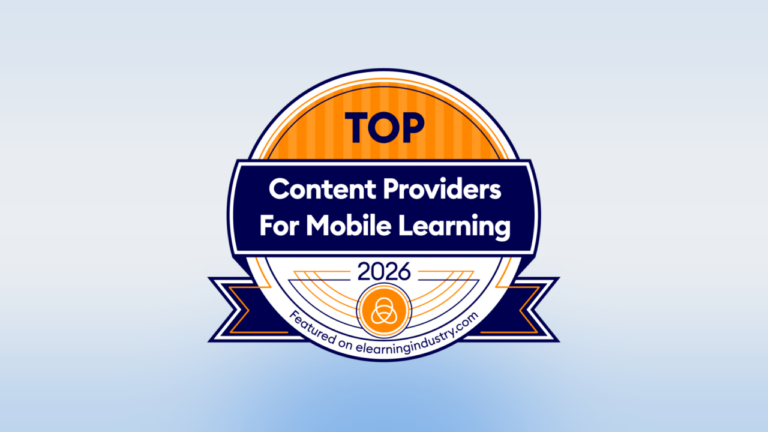
AllenComm Earns Spot on Best Mobile Learning Content Providers 2026 List
eLearning Industry honors AllenComm for its custom mobile learning solutions for enterprise, built to improve performance outcomes at scale. SALT LAKE CITY, [July 29, 2026] — AllenComm has been named to eLearning Industry’s...
ALLENCOMM Press Releases
AllenComm Named a Top Employee Engagement Training Provider by eLearning Industry
AllenComm has been recognized by eLearning Industry as a 2026 top provider for employee engagement, cited for scalable, personalized L&D that drives measurable results. SALT LAKE CITY, [June 24, 2026]...
ALLENCOMM Press Releases