

ALLENCOMM BLOG | Insights
4 Ways Manufacturing Learning Leaders Can Use Digital Apprenticeship in Onboarding
February 26, 2025
The Fourth Industrial Revolution (Industry 4.0 or 4IR) is in full swing. But how prepared is your organization to take advantage of the benefits? According to a McKinsey global survey in 2019, around 70 percent of respondents said their companies were already implementing new technology or making it a strategic priority. Six years later, technology has only continued to evolve. Organizations that have been able to keep up with this evolution have pulled ahead … while the competition has fallen behind.
Luckily, regardless of where your organization is today, it’s not too late to take the next step in making technology work better for you. Especially in manufacturing environments where tribal knowledge, hands-on skills, and safety are vital to organizational success, there are more opportunities than ever to prepare your next-gen workforce for the future.
Not sure where to start? It’s easier than you might think. Although there are a lot of ways you can use technology to elevate your onboarding approach, here are four in particular that use digital apprenticeship to take learner engagement to the next level.
1. Virtual Learning (Beyond Just eLearning)
With digital apprenticeship, you can blend traditional apprenticeship models with digital tools to help learners practice skills in realistic environments without having to actually be there in person. Virtual reality, augmented reality, other forms of simulations, and more—all of these are great options to put learning at a new hire’s fingertips.
Better yet, they won’t have to worry about making a mistake, ruining expensive equipment, or (most importantly) getting injured. They can practice at their own pace, in an environment that simulates the real world, as they become more confident in the processes that keep your business running.
As learners explore this digital space, they also build technical skills and deepen their ability to troubleshoot situations, two key components of professional growth. They become more digitally literate while connecting with their day-to-day work, and they can feel an even greater sense of satisfaction as they overcome problems and independently answer their own questions.
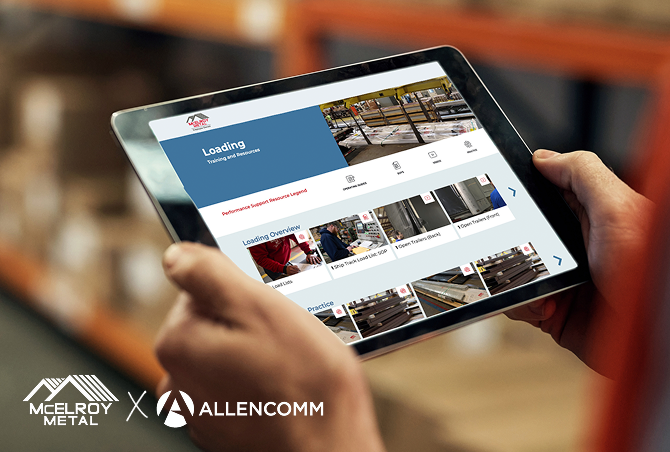
New hires and experienced team members alike can benefit from this approach. For example, in partnership with AllenComm, McElroy Metal recently finished implementing an initiative to establish consistency across all divisions of their organization, provide structured training, and support employee autonomy. Their employees are the heart of their organization, so they wanted to invest in their veteran team members as much as they wanted to engage younger workers in their mission, values, and processes.
Safety and efficiency were key targets of the initiative, and through an enhanced digital learning approach complete with web-based training, simulations, high-quality video demonstrations, and easily accessible resources, they were able to completely transform their onboarding.
The new solution is scalable and flexible. It emphasizes safety while equipping learners with exactly what they need to succeed. It’s easily accessible just by scanning a QR code even on the factory floor, and some of the simulations allow learners to practice loading trucks with equipment in a virtual environment before they ever have to do it on the job. Finally, at its core, it draws learners into the organization’s legacy to see the part they play in McElroy Metal’s future.
2. Remote Mentoring, Coaching, and Peer Support
The manufacturing industry itself is often complex. It requires a careful touch to ensure all content is accurate, meaningful, and in line with safety protocols or quality standards. When you can blend in-person learning with both virtual learning AND remote community support, you have greater control over the experience and outcomes.
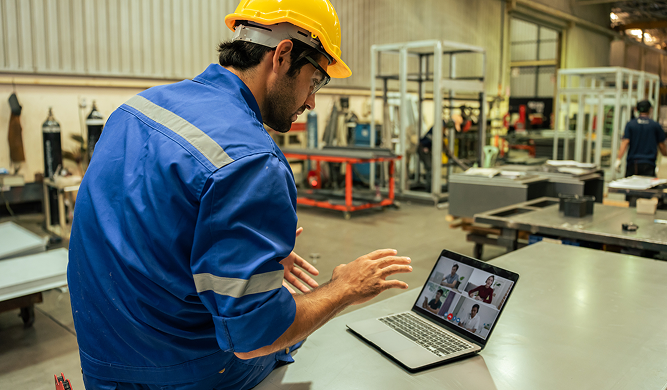
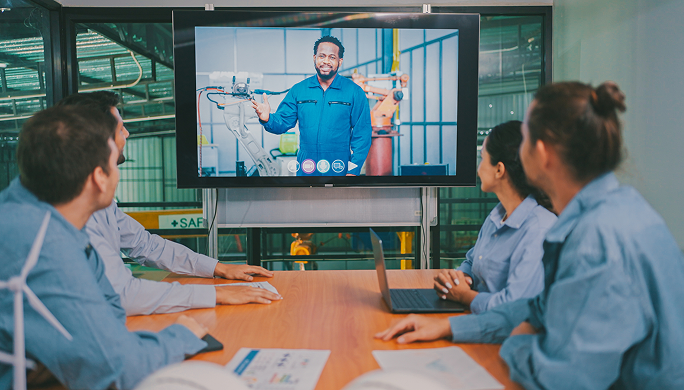
Your most experienced employees can become beacons that light the way for new hires as they find their footing in their learning journey. This type of digital apprenticeship allows for an even greater opportunity for support spanning across the globe, rather than being limited to only a single facility. Learners can ask questions, receive guidance, meet with their coach or mentor on video calls (especially to demonstrate processes or learn about machine maintenance), and even collaborate on specific tasks online without having to be in the same room.
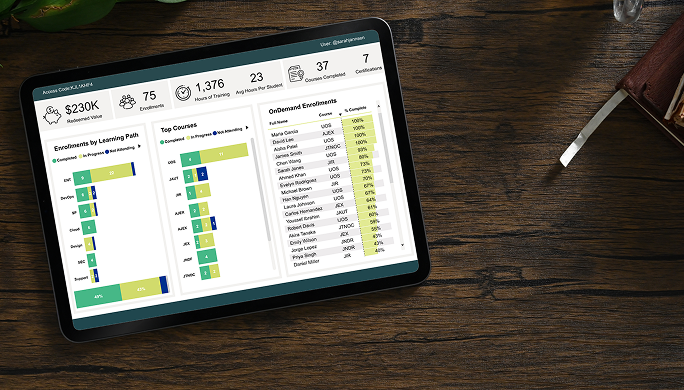
Coaches and mentors can also track learner progress to see what each individual excels in and where they could use some additional help. Each goal or milestone can be displayed within a dashboard that acts as a roadmap for the learner’s journey.
Even from a community perspective, online forums or networking tools foster the culture you want to see at your organization. Everyone can learn from each other, share stories about their successes, celebrate achievements, ask questions about the job, their role, or even company history to better connect with your brand … the options are limitless, and will only continue to expand as technology evolves.
3. AI-Driven Technologies
Speaking of technology and evolution, AI is one of today’s hottest topics. But did you know it can help with your training, too? More than establishing an outline or a base of your learning assets, it can also assign a personalized learning path that’s unique for each learner.
Learners’ input can be collected throughout web-based training modules to better serve up the type of content they need most based on which answers they got right, which they got wrong, and how long they spent on specific activities. AI can also gather data that’s vital to measuring the success of your program, which can help you course correct as needed or prove to stakeholders that the initiative is moving along the right path to meet anticipated goals.
As with all AI, it’s important to be mindful of using it ethically. Before you get started, check out what other L&D leaders are considering when it comes to upholding learner rights, establishing AI governance, incorporating human oversight, and keeping internal information safe.
“I’ve worked with companies that are very, very locked down, do not use anything without our approval and have policies that say AI is not allowed. … That is not the stance that you want to take because people are going to use it anyway. … Other companies are exactly the opposite. They’re not locked down and they’re actually not even really thinking about it, so you’ve got different employees using different tools and platforms without guidance at all. Between those two extremes is what I’ve seen be the most effective.”
— Kari Naimon, CEO of AixHR (featured in the Learner Experience Evolution podcast, Episode 14: Practical AI L&D Applications for the Workplace)
4. On-Demand Certifications
Last but not least, think about all the certifications your employees need to obtain to safely, effectively, and efficiently perform their jobs. What if you could take some of the busywork out of the process?
As a learning leader, you’ve already got a lot on your plate. Tracking certifications and making sure the right people are available at the right time adds even more to the equation. Even if you’re not directly in charge of ensuring people are properly certified, you may still be juggling learning for multiple facilities, communicating with different teams and stakeholders, and trying to keep everyone happy (which, let’s be honest, is usually an impossible task). However, by helping to reduce the certification burden on other organizational leaders, you can take some of the stress off your own shoulders as well, while building credibility as an expert in your field.
You can use digital apprenticeship tools to make certification resources more easily accessible. These tools can also help you establish a system for maintaining digital profiles for each employee that shows which certifications they have, which they need, or any that need to be renewed in the next few months. This information can also guide how you structure your learning plan for the organization, especially when building a case for stakeholders for a new training initiative.
As learners continue to demonstrate their growth in specific competencies and obtain certifications as necessary, they can move on to more advanced tasks and become even more valuable team members committed to shared organizational success.
Embrace the Opportunities Ahead
There’s no doubt that digital apprenticeship can enhance skill development in a manufacturing environment. When these apprenticeship opportunities are kept up to date with evolving technology, the result is a learning experience that’s flexible, scalable, and much more effective than traditional alternatives.
So, how will you adapt with technology to meet today’s needs? How will you evolve to meet the needs of tomorrow? And finally, how can you prepare to articulate the value of technology and your ideas to others who just don’t see your vision yet? Define your ideal vision of what digital apprenticeship can look like for your organization, and take the next step in bringing that vision to life.
Rather than becoming the one that falls behind, you can position your organization to overcome the competition by making the most of what digital apprenticeship tools have to offer and reaping the benefits along the way.
Resources For L&D Leaders

free guide
free guide
insights | on the blog
ALLENCOMM Press Releases
AllenComm Earns Spot on Best Mobile Learning Content Providers 2026 List
eLearning Industry honors AllenComm for its custom mobile learning solutions for enterprise, built to improve performance outcomes at scale. SALT LAKE CITY, [July 29, 2026] — AllenComm has been named to eLearning Industry’s...
ALLENCOMM Press Releases
AllenComm Named a Top Employee Engagement Training Provider by eLearning Industry
AllenComm has been recognized by eLearning Industry as a 2026 top provider for employee engagement, cited for scalable, personalized L&D that drives measurable results. SALT LAKE CITY, [June 24, 2026]...
ALLENCOMM Press Releases