

ALLENCOMM BLOG | Insights
Upskilling vs. Reskilling: Which Training Do You Need Right Now?
May 11, 2026
Understanding upskilling vs reskilling is one of the most important strategic decisions HR and L&D leaders face today. And for good reason! Both approaches address workforce capability gaps, but they serve different purposes and require different solutions.
- Upskilling means developing deeper expertise within an employee’s existing role.
- Reskilling means training an employee to perform an entirely new role.
Choosing the wrong approach can waste time, budget, and talent. But choosing the right one builds a workforce capable of meeting tomorrow’s demands. So, how prepared are you for what’s ahead—especially when it comes to upskilling and reskilling your talent? This article defines upskilling and reskilling in greater detail, with insights and best practices to help L&D leaders like you set teams up for success in this evolving world.
What is the difference between upskilling and reskilling?
The core difference between upskilling and reskilling comes down to trajectory. Upskilling moves an employee forward along their current path. Reskilling redirects them onto a new one. Both involve learning, but the scope and intent are fundamentally different.
Upskilling typically occurs when a job evolves due to new technology, updated processes, or expanded responsibilities. A financial analyst learning to work with AI-driven forecasting tools is upskilling. The role is the same; the required competencies have grown.
Reskilling applies when a role becomes obsolete or when business needs shift significantly. A data entry clerk trained to become a data quality analyst is reskilling. The underlying position has changed, and entirely new capabilities are required.
So, what is the difference between reskilling and upskilling in practical terms? Let’s break it down:
| Dimension | Upskilling | Reskilling |
| Definition | Deepening or advancing existing skills | Learning entirely new skills for a new role |
| Goal | Grow within current role or career path | Transition to a new role or function |
| Scope of Change | Incremental | Transformational |
| Training Duration | Shorter; builds on existing knowledge | Longer; starts from a new baseline |
| Best Use Case | Technology adoption, leadership development | Role elimination, digital transformation |
| Employee Impact | Career advancement | Career pivot |
Both strategies serve organizations navigating the same underlying pressure: the pace of change is outrunning the pace of traditional hiring. Internal development is often faster, less expensive, and more effective at retaining institutional knowledge than external recruitment.
Why is upskilling and reskilling crucial?
According to the World Economic Forum, more than 1 billion workers will need to be reskilled or upskilled by 2030 due to automation and digital disruption. That figure reflects a structural shift, not a short-term trend.
For organizations, the cost of inaction is significant. Skill gaps reduce productivity, slow innovation, and increase dependence on external hiring in a competitive talent market. For employees, the absence of development opportunities is a key driver of disengagement and turnover.
Upskilling and reskilling address both sides of that equation. When organizations invest in their existing workforce, they signal that employees are valued contributors to the company’s future, not interchangeable resources. That signal matters. According to Gallup, employees who feel they have opportunities to learn and grow at work are significantly more likely to stay engaged.
There are also financial arguments. The Society for Human Resource Management (SHRM) estimates that the average cost to replace an employee ranges from six to nine months of that person’s salary. Reskilling an existing employee, even for a substantially different role, typically costs far less.
Industries undergoing the most disruption, including manufacturing, financial services, healthcare, and retail, are reporting the greatest urgency around reskilling vs upskilling programs. Leaders who treat these initiatives as long-term investments rather than short-term fixes tend to build more resilient organizations.
What is an example of upskill and reskilling?
Here are some real-world examples to clarify the distinction.
Example 1: Upskilling
A sales team at a mid-size software company is moving from manual CRM data entry to an AI-assisted sales platform. The team already understands the sales process, customer relationships, and pipeline management. What they lack is proficiency with the new tool and the analytical skills to use its insights effectively.
The training program targets exactly those gaps. Employees learn how to navigate the platform, interpret AI-generated recommendations, and adjust their approach based on real-time data. The role is the same; the skill set has expanded. That’s upskilling!
Example 2: Reskilling
A large retail chain is automating its inventory management operations. Many warehouse associates who managed physical stock counts will see their roles eliminated or drastically reduced. However, the company needs more people in logistics coordination and supply chain analysis roles.
Rather than conducting mass layoffs and hiring new staff, the organization launches a reskilling program. Warehouse associates learn supply chain fundamentals, data analysis basics, and the software systems used by the logistics team. They move into new roles within the organization. That’s reskilling.
Both examples demonstrate why organizations need to assess the nature of the gap before designing training. Applying an upskilling approach to a reskilling need will leave employees underprepared. Applying a reskilling framework when upskilling is sufficient wastes time and resources. Yet, when done right, the benefits of investing in upskilling and reskilling programs can make an incredible impact and set you apart from the competition.
Benefits of Investing in Upskilling and Reskilling Programs
Organizations that build structured upskilling and reskilling programs see benefits across multiple dimensions, such as…
- Reduced turnover: Employees who see a path forward within the organization are less likely to leave.
- Faster deployment: Trained internal employees are typically ready to perform in new or expanded roles faster than external hires who need onboarding.
- Stronger culture: Development programs signal organizational values. They build loyalty and attract talent who prioritize growth.
- Better ROI on talent: Internal mobility reduces per-hire costs and preserves institutional knowledge that would otherwise walk out the door.
- Greater agility: Organizations with strong learning cultures adapt more quickly to market changes and competitive pressures.
While off-the-shelf solutions can help achieve some of these benefits, the real value lies in custom learning for upskilling and reskilling talent, which allows for greater personalization and skills development opportunities that effectively transfer knowledge into on-the-job action.
Why is custom eLearning the right choice for upskilling and reskilling?
Off-the-shelf training courses provide general information. Custom eLearning provides learning that’s directly tied to the specific skills, roles, and contexts that matter to your organization. That distinction is critical when the stakes are high.
For upskilling, custom eLearning can be designed around the exact tools, workflows, and performance expectations of a specific team or function. Learners practice applying new capabilities in simulations that mirror their real work environment. They receive feedback calibrated to the standards of their specific role, rather than a generic benchmark.
For reskilling, custom eLearning is especially valuable because the learning journey is more complex. Employees aren’t just learning new information; they’re building new professional identities. Effective reskilling programs often incorporate scenario-based learning, spaced repetition, and branching decision trees that reflect the actual complexity of the target role.
According to the Association for Talent Development (ATD), custom learning programs are more likely to improve performance outcomes because they align content, context, and measurement. Organizations that use generic training for complex reskilling initiatives often find that employees complete the course but can’t perform the job.
Custom eLearning also enables reskilling vs upskilling programs to incorporate xAPI tracking and LMS integration, so L&D teams can measure knowledge transfer, skill application, and performance change over time. That data is essential for demonstrating ROI and refining programs as business needs evolve.
But as with any other initiative, sometimes it can be easy to make a mistake. We’re only human, after all! Let’s take a look at some of these common mistakes—and how to avoid them—so you can avoid costly rework and meet stakeholder expectations with your next upskilling or reskilling program.
Common Mistakes to Avoid
In our 40+ years of experience, the most common mistakes we see L&D leaders make include:
- Treating upskilling and reskilling as the same thing: They require different designs, timelines, and support structures.
- Skipping the skills gap analysis: Training built without a clear picture of the gap between current and required capabilities rarely closes it.
- Using off-the-shelf courses for complex transitions: Generic content can’t replicate the specificity needed for meaningful reskilling.
- Failing to measure outcomes: Completion rates aren’t performance metrics. Organizations must track behavior change and business impact.
- Neglecting manager involvement: Frontline managers play a critical role in reinforcing new skills after training ends. Excluding them from the design process is, unfortunately, a consistent failure point.
Although we’ve already defined the difference between upskilling and reskilling in this article, the importance of separating the two can’t be understated. Specifically, if the first (and most common) mistake is treating upskilling and reskilling as the same thing, then what does it look like to treat them as different skills development opportunities? And in what ways does this confusion surface itself for leaders as they try to figure out which one is best for their situation?
Let’s zoom in a little bit on the difference—and why this distinction is critical for skills development success.
Is reskilling the same as upskilling?
The truth is: they’re completely different! Despite the fact that both terms appear together in workforce discussions, reskilling and upskilling describe fundamentally different training needs. Upskilling extends what an employee can already do. Reskilling replaces the foundation of what they do with something new.
The confusion between reskill vs upskill is completely understandable. Both involve learning. Both are responses to change. Both are often delivered through similar channels, including eLearning, instructor-led training, and on-the-job coaching. But the design, duration, and organizational support required are meaningfully different.
Upskilling programs are generally shorter, more targeted, and easier to integrate into an employee’s existing schedule. Reskilling programs require more time, greater disruption to current work arrangements, and often involve a formal role transition process that L&D teams must coordinate with HR and department leaders.
Organizations that treat them as interchangeable tend to underinvest in reskilling, which can produce a less-than-ideal outcome: employees are exposed to new content but aren’t genuinely prepared to perform in a new function.
Design Upskilling and Reskilling Programs That Actually Work
The upskilling vs reskilling question directly determines how an organization deploys its training resources, designs its learning programs, and prepares its workforce for a rapidly changing environment. Getting the distinction right is a prerequisite for getting the outcomes right.
Both strategies are necessary. Most organizations will need to implement both simultaneously, with different programs targeting different segments of the workforce. The common thread is intentionality: effective upskilling and reskilling programs begin with a clear understanding of where the organization is going and what capabilities are needed to get there.
When learning solutions are designed with that clarity, built around real job contexts, and measured against performance outcomes, they deliver results that generic training simply can’t match. AllenComm partners with organizations to design exactly that kind of learning. Schedule a consultation today to start the conversation.
Resources For L&D Leaders
free guide
free guide
insights | on the blog
ALLENCOMM Press Releases
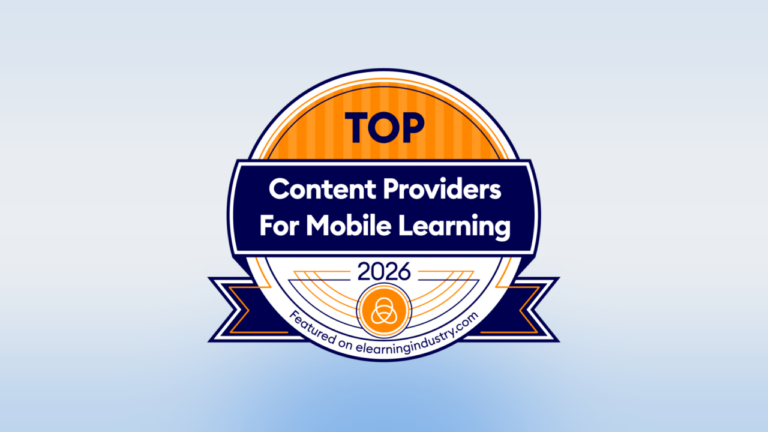
AllenComm Earns Spot on Best Mobile Learning Content Providers 2026 List
eLearning Industry honors AllenComm for its custom mobile learning solutions for enterprise, built to improve performance outcomes at scale. SALT LAKE CITY, [July 29, 2026] — AllenComm has been named to eLearning Industry’s...
ALLENCOMM Press Releases
AllenComm Named a Top Employee Engagement Training Provider by eLearning Industry
AllenComm has been recognized by eLearning Industry as a 2026 top provider for employee engagement, cited for scalable, personalized L&D that drives measurable results. SALT LAKE CITY, [June 24, 2026]...
ALLENCOMM Press Releases